Crypto on Exchange: Is It Safe to Keep Your Cryptocurrency?
Published November 10, 2026
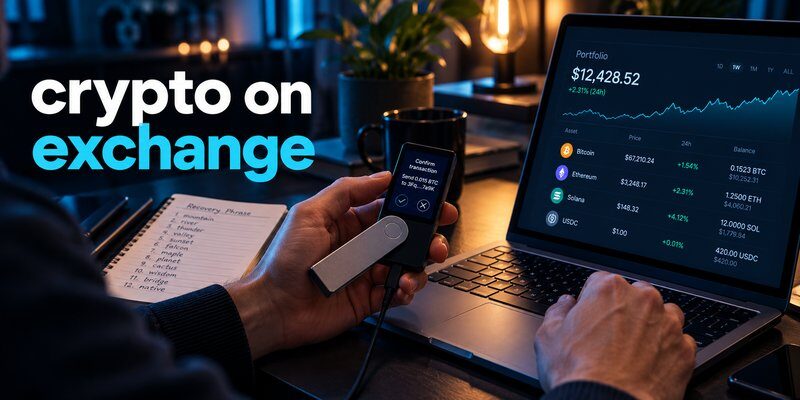
Keeping crypto on exchange accounts can be convenient for trading, but it comes with custody, security, and withdrawal risks. When you hold cryptocurrency on a custodial exchange, the platform generally controls the private keys associated with your assets. This means you depend on the exchange to safeguard funds, process withdrawals, and maintain operational access.
For active trading, keeping a limited amount of cryptocurrency on an exchange may be practical. For long-term holdings, some users prefer self-custody wallets that give them direct control over private keys. However, self-custody introduces its own risks, including lost recovery phrases, phishing, and irreversible transaction mistakes.
This guide explains whether it is safe to keep crypto on an exchange, the most important risks, how exchanges compare with personal wallets, and practical ways to protect your cryptocurrency.
Is It Safe to Keep Crypto on an Exchange?
Keeping crypto on an exchange can be reasonably convenient, but no centralized cryptocurrency exchange is completely risk-free.
Security depends on the platform’s custody practices, financial condition, account protections, withdrawal policies, and operational reliability.
Even when an exchange uses strong technical security, users may still face risks from account compromise, platform insolvency, service disruptions, or restricted withdrawals.
Quick answer: Keeping crypto on an exchange may be suitable for active trading and short-term liquidity needs. However, users should understand the custody risks, enable strong account security, and avoid assuming that exchange-held cryptocurrency is protected in the same way as insured bank deposits.
What Happens When You Keep Crypto on an Exchange?
When you deposit cryptocurrency into a custodial exchange, the platform typically manages the wallet infrastructure and private keys.
Your account balance represents the assets or contractual entitlement recorded by the platform, subject to its applicable terms.
The exchange processes trading, deposits, and withdrawals according to its systems and policies.
Unlike a self-custody wallet, you generally cannot independently authorize blockchain transfers directly from the exchange’s custody wallets.
This creates dependence on the provider.
Do You Own Crypto Stored on an Exchange?
The legal and contractual status of cryptocurrency held on an exchange depends on the platform’s terms, the custody arrangement, and applicable law.
In some arrangements, customers may have specific rights to identified assets. In others, they may have contractual claims against the provider.
Do not assume that every exchange uses the same ownership structure.
Review the terms of the specific legal entity serving your region.
Read more: Crypto Wallet 2FA: What It Protects and How to Set It Up
Secure your accounts with fast, reliable two-factor authentication. Download now and protect your login in seconds.Download Authenticator App
7 Major Risks of Keeping Crypto on an Exchange
Understanding the risks of storing crypto on exchange accounts is essential before deciding how much cryptocurrency to leave on a trading platform.
Exchange Hacking and Security Breaches
Centralized exchanges can be attractive targets for cybercriminals because they may control significant amounts of cryptocurrency.
Attackers may attempt to compromise exchange infrastructure, employee accounts, wallet systems, or customer credentials.
A successful incident can affect trading, withdrawals, or access to customer assets.
Even strong exchange security cannot eliminate every threat.
How to reduce risk: Choose providers with transparent security practices, enable strong account authentication, and avoid keeping unnecessary assets on a single platform.
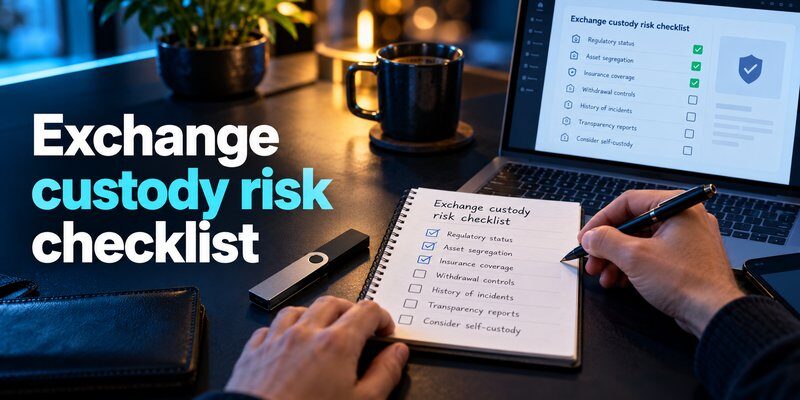
Exchange Insolvency or Bankruptcy
A cryptocurrency exchange may experience financial difficulties, liquidity shortages, or insolvency.
If the provider cannot meet its obligations, customers may face withdrawal restrictions or losses.
The outcome depends on the platform’s financial condition, legal structure, custody arrangements, and applicable bankruptcy rules.
Two-factor authentication cannot protect users against exchange insolvency.
How to reduce risk: Review available financial disclosures, custody terms, and the consequences of a potential provider failure.
Withdrawal Freezes and Service Restrictions
Exchanges may temporarily or permanently restrict withdrawals for several reasons.
These can include:
- Security incidents.
- Technical maintenance.
- Liquidity problems.
- Compliance reviews.
- Account verification requirements.
- Legal or regulatory restrictions.
An account balance does not always guarantee immediate access to cryptocurrency.
How to reduce risk: Understand the exchange’s withdrawal policies and avoid relying on one provider for every liquidity need.
Account Takeover and Phishing
Attackers may attempt to steal exchange login credentials through phishing websites, malware, or social engineering.
A compromised account can expose cryptocurrency to unauthorized withdrawals or other harmful activity.
Using a strong password alone may not be sufficient.
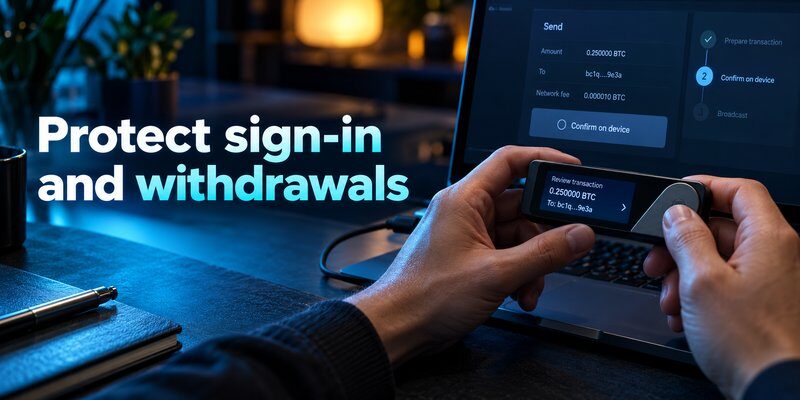
How to reduce risk: Enable phishing-resistant authentication where supported, or use a trusted TOTP authenticator application when appropriate.
Also protect the email account used for password recovery.
Regulatory and Jurisdictional Risks
Cryptocurrency exchange services operate under different legal and regulatory requirements.
A platform may restrict certain assets, trading products, or withdrawal services depending on the user’s jurisdiction.
Regulatory changes may also affect account access or service availability.
How to reduce risk: Review the exchange’s current terms and the legal entity responsible for your account.
Read more: Crypto Wallet Scams: How to Spot and Stop Them
Operational Failures and Outages
Even without a security breach, exchanges can experience technical problems.
Users may encounter delayed withdrawals, unavailable trading systems, incorrect account displays, or temporary login failures.
These problems can become particularly disruptive during periods of market volatility.
How to reduce risk: Maintain realistic expectations about service availability and avoid depending on immediate access to every exchange-held asset.
Custody and Counterparty Risk
When another organization controls your cryptocurrency keys, you depend on that organization to manage assets appropriately.
This is known as counterparty or custodial risk.
The provider’s operational decisions, security controls, and financial obligations can affect your ability to access funds.
How to reduce risk: Understand the custody model and consider whether some holdings would be better managed through a tested self-custody arrangement.
Crypto on Exchange vs Crypto Wallet: What’s the Difference?
The main difference between keeping crypto on an exchange and using a self-custody wallet is who controls the private keys.
| Feature | Custodial crypto exchange | Self-custody crypto wallet |
|---|---|---|
| Private key control | Exchange or custody provider | Wallet owner |
| Trading convenience | Often integrated | May require external services |
| Account recovery | Provider-managed process | Depends on wallet backups |
| Exchange insolvency exposure | Yes | Not for assets held independently |
| Seed phrase responsibility | Usually handled by provider | User manages recovery information |
| Withdrawal availability | Subject to provider controls | Depends on wallet and blockchain availability |
| Login authentication | Often supports 2FA | Usually relies on wallet access and signing controls |
| Main security risk | Provider failure and account takeover | Key loss, theft, and transaction mistakes |
| Long-term storage | Requires trust in provider | Requires reliable self-custody practices |
Advantages of Keeping Crypto on an Exchange
Keeping cryptocurrency on an exchange can offer several practical benefits:
- Convenient buying and selling.
- Integrated trading interfaces.
- Access to supported liquidity.
- Account recovery processes.
- Reduced need to manage private keys directly.
- Simplified access to certain platform services.
These advantages can be useful for beginners and active traders.
Disadvantages of Exchange Custody
The primary disadvantages include:
- Dependence on the exchange.
- Potential withdrawal restrictions.
- Provider insolvency exposure.
- Centralized security risks.
- Account access limitations.
- Platform-specific fees and policies.
Users should evaluate these tradeoffs before deciding where to store cryptocurrency.
Read more: Best Cold Wallet for Crypto in 2026: Top Picks, Safety Tips and How to Choose
How to Keep Crypto on Exchange Accounts Secure: 8 Tips
If you decide to keep cryptocurrency on an exchange, account security should be a priority.
Choose a Reputable Exchange
Research the platform before depositing significant funds.
Review its operational history, applicable regulatory status, security disclosures, custody terms, and withdrawal policies.
Avoid assuming that popularity or brand recognition guarantees financial safety.
Use a Strong, Unique Password
Create a unique password for your exchange account.
Do not reuse passwords from email, social media, or other services.
A password manager can help generate and store strong credentials.
Enable Two-Factor Authentication
Two-factor authentication can reduce the risk of unauthorized account access.
When available, consider phishing-resistant passkeys or FIDO2 security keys.
If the exchange supports TOTP, an authenticator application can generate time-based verification codes.
Avoid relying solely on SMS when stronger supported options are practical.
Protect Your Recovery Email
Your email account may be used for password resets, security alerts, and account recovery.
Secure it with strong authentication and review its recovery options.
A compromised email account can undermine other security measures.
Enable Withdrawal Address Allowlists
Some exchanges let users restrict withdrawals to approved cryptocurrency addresses.
This can reduce certain unauthorized withdrawal risks.
Review whether the platform supports address-change delays, confirmation requirements, or additional security checks.
Monitor Account Activity
Check recent login activity, connected devices, and withdrawal history.
Remove unfamiliar sessions and investigate suspicious account notifications.
Use the exchange’s official application or website rather than links in unexpected messages.
Secure Backup Authentication Methods
Save exchange-issued backup codes securely and separately from your primary authentication device.
If you change phones, verify that the new authenticator works before removing the old one.
Follow the platform’s official recovery process if access is lost.
Avoid Keeping Unnecessary Funds on the Exchange
Consider whether you need all your cryptocurrency available for immediate trading.
For assets you intend to hold long term, a properly managed self-custody wallet may reduce dependence on exchange custody.
However, moving funds introduces private-key management and transaction risks.
Choose a storage approach that matches your security capabilities.
Read more: What Is a Multi Signature Wallet? How It Works, Benefits & Risks
How to Evaluate a Crypto Exchange Before Depositing Funds
Not all cryptocurrency exchanges provide the same security, transparency, or legal protections.
Before choosing a platform, review the following factors.
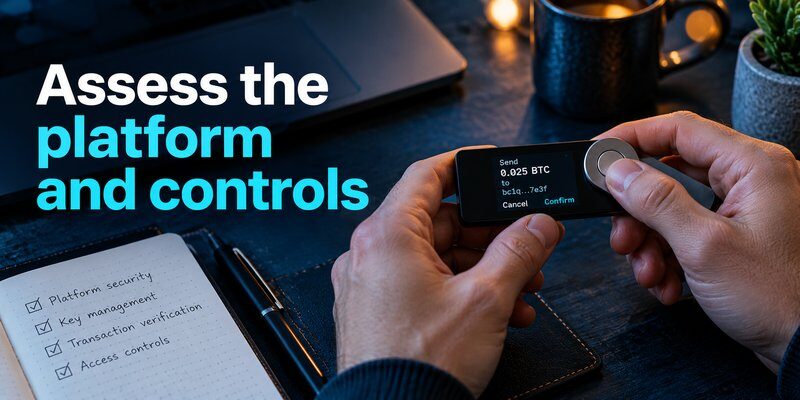
| Evaluation factor | What to check | Why it matters |
|---|---|---|
| Legal entity | Which company serves your account | Determines contractual relationship |
| Custody model | How customer assets are held | Clarifies provider dependence |
| Financial disclosures | Available reserve and liability information | Helps assess transparency |
| Security controls | MFA, withdrawal allowlists, account alerts | Reduces certain account risks |
| Withdrawal policy | Limits, fees, delays, restrictions | Affects access to funds |
| Incident history | Previous breaches and service disruptions | Provides operational context |
| Regulatory status | Applicable registrations and restrictions | Clarifies jurisdictional exposure |
| Customer support | Verified channels and recovery procedures | Important during incidents |
Does Proof of Reserves Guarantee Exchange Safety?
No.
Proof-of-reserves disclosures may provide information about certain assets held by an exchange at a particular point in time.
However, they do not necessarily establish complete liabilities, solvency, asset segregation, or future withdrawal availability.
Review the methodology and limitations of any reserve report.
Are Crypto Exchange Funds Insured?
Insurance coverage varies significantly by platform, jurisdiction, policy, and type of loss.
Do not assume cryptocurrency balances are covered by ordinary bank deposit insurance.
If an exchange advertises insurance, review the specific covered events, exclusions, limits, and eligible customers.
Should You Keep Crypto on an Exchange or in a Wallet?
The better storage approach depends on how you use cryptocurrency and your ability to manage security responsibilities.
When Keeping Crypto on an Exchange May Make Sense
Exchange custody may be practical when:
- You trade frequently.
- You need access to exchange liquidity.
- You hold a limited amount for short-term transactions.
- You prefer provider-managed account recovery.
- You understand and accept the platform’s custody risks.
When Self-Custody May Be More Suitable
Self-custody may be appropriate when:
- You intend to hold cryptocurrency long term.
- You want direct control over private keys.
- You can securely manage recovery phrases.
- You understand transaction verification.
- You are comfortable maintaining wallet backups.
Self-custody removes some provider-related risks but introduces responsibility for key protection.
Can You Use Both?
Yes.
Some cryptocurrency users maintain a smaller trading balance on an exchange while holding longer-term assets in a separate self-custody wallet.
This approach can reduce dependence on a single custody arrangement.
However, it does not eliminate market risk, transaction errors, or security threats.

How Much Crypto Should You Keep on an Exchange?
There is no universally safe percentage of cryptocurrency to keep on an exchange.
The appropriate amount depends on your circumstances.
Consider the following questions:
- How often do you trade?
- How much cryptocurrency do you need for immediate transactions?
- What would happen if withdrawals were temporarily unavailable?
- Can you manage a self-custody wallet securely?
- Have you tested your wallet recovery process?
- Would losing access to the exchange create serious financial consequences?
A practical principle is to avoid exposing more cryptocurrency to any single custody arrangement than you can reasonably tolerate losing or temporarily being unable to access.
Example: Trading Funds vs Long-Term Holdings
An active trader may keep funds needed for planned transactions on an exchange.
The same person may choose to hold longer-term assets in a separate wallet with tested backup procedures.
Another user with a small balance may reasonably prioritize convenience.
The appropriate decision depends on risk tolerance and operational capability, not a fixed percentage.
How to Move Crypto From an Exchange to a Wallet Safely
If you decide to move cryptocurrency into self-custody, verify the wallet setup before initiating a transfer.
Step 1: Choose a Compatible Wallet
Select a wallet that supports the cryptocurrency and blockchain network you intend to use.
For long-term holdings, consider whether a hardware wallet fits your needs.
Step 2: Secure Your Recovery Information
If your wallet uses a seed phrase, record it accurately during trusted setup.
Keep it offline and never share it.
For guidance, see how to protect your seed phrase.
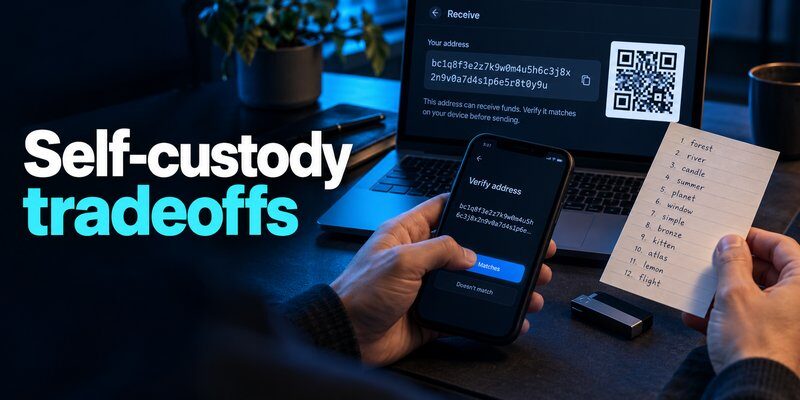
Step 3: Verify the Receiving Address
Open your wallet and locate the receiving address for the correct asset and network.
Verify the address using a trusted method.
For compatible hardware wallets, confirm the receiving address on the device display.
Step 4: Confirm the Blockchain Network
Many cryptocurrencies operate across multiple networks.
Sending funds through an unsupported network may result in loss or require complex recovery steps.
Verify that the exchange withdrawal network matches the destination wallet’s supported network.
Step 5: Send a Small Test Transaction
When practical, transfer a small amount first.
Confirm that the funds arrive in the intended wallet.
A successful test reduces some operational uncertainty but does not guarantee every later transfer will be correct.
Step 6: Transfer the Remaining Amount
After verifying the destination and network, proceed with the remaining transfer if appropriate.
Review transaction fees, withdrawal limits, and security confirmations.
Never rush a transfer because of an unsolicited warning or urgent message.
What Happens If a Crypto Exchange Goes Bankrupt?
If a cryptocurrency exchange becomes insolvent, customers may face restricted withdrawals, delayed access, or potential losses.
The outcome depends on the provider’s legal structure, custody arrangements, available assets, and applicable insolvency law.
Some customers may have contractual claims against the provider rather than direct access to specific blockchain assets.
Account security measures such as passwords and 2FA do not prevent insolvency.
This is one reason custody risk should be considered separately from account hacking risk.
Frequently Asked Questions
Is It Safe to Keep Crypto on an Exchange?
Keeping cryptocurrency on an exchange can be convenient, but it involves custody, account security, operational, and financial risks. No exchange can guarantee complete protection against every form of loss.
Should I Keep All My Crypto on an Exchange?
There is no universal answer. Consider your trading needs, custody risk tolerance, and ability to manage self-custody securely before deciding how much to keep on a platform.
Is It Better to Keep Crypto on an Exchange or in a Wallet?
An exchange offers convenience and provider-managed account access. A self-custody wallet offers direct key control but requires secure backups and careful transaction management.
Can a Crypto Exchange Lose My Funds?
Yes. Security breaches, insolvency, operational failures, and other incidents may affect access to customer cryptocurrency.
Does Two-Factor Authentication Make Crypto Exchanges Safe?
2FA reduces certain account takeover risks but does not eliminate provider insolvency, withdrawal restrictions, or other custody-related threats.
What Happens If My Crypto Exchange Is Hacked?
The outcome depends on the incident, the platform’s custody arrangements, its response, and applicable protections. Users should follow verified exchange communications and secure their accounts.
Can I Transfer Crypto From an Exchange to a Hardware Wallet?
Yes, if the exchange supports withdrawals of the asset and network accepted by the destination wallet. Always verify the address and network before transferring.
How Much Cryptocurrency Should I Keep on an Exchange?
There is no universally safe amount. Consider how much you need for trading, how much provider risk you can tolerate, and whether you can manage self-custody responsibly.
Can I Recover Crypto Sent to the Wrong Network?
Recovery depends on the blockchain, destination address, wallet compatibility, and exchange policies. Some transfers may be recoverable, while others may result in permanent loss.
Final Thoughts
Keeping crypto on exchange accounts offers convenience for trading, but it also creates dependence on a third-party custody provider.
Strong authentication, careful platform evaluation, and withdrawal safeguards can reduce certain risks, but they cannot eliminate every threat.
For long-term cryptocurrency holdings, self-custody may be an alternative when you can securely manage private keys and recovery information.
The most important decision is understanding who controls your cryptocurrency, what risks you accept, and how you will recover access if something goes wrong.