
How to Recover a Lost Crypto Wallet: The Complete 2026 Guide
Published November 5, 2026
Short answer: How to recover a lost crypto wallet depends on one thing: whether you still have a valid recovery credential. If you have your seed phrase (the 12 or 24 recovery words), install an official wallet app, choose “Restore” or “Import wallet,” enter the words in the exact order, and set a new password. Your balance will reappear because your coins never left the blockchain. Without a seed phrase, recovery is possible only if another credential survives, such as a private key, a keystore file with its password, or a device that is still unlocked. If every backup is gone, no company can restore the wallet for you.
Losing access to a wallet is stressful, but it is not always permanent, and learning how to recover a lost crypto wallet is easier than most people expect. The right move depends on what exactly you lost: a device, a password, a PIN, a seed phrase, or funds taken by a thief. This guide explains how to recover a lost crypto wallet in each scenario, in plain language, shows what is realistic, and helps you avoid the recovery scams that target people in your position.
What Does It Mean to Lose a Crypto Wallet?
A crypto wallet does not hold coins the way a leather wallet holds cash. Your assets are recorded on a blockchain. The wallet stores the private keys that prove you are allowed to move them. When people say they have lost a wallet, they usually mean one of five very different things:
- Lost, stolen, or broken device: your phone, laptop, or hardware wallet is gone or damaged.
- Deleted app or extension: the wallet software was removed or the browser profile was reset.
- Forgotten password or PIN: you cannot unlock the app or device.
- Lost seed phrase: the written backup is missing.
- Stolen funds: a scammer or hacker moved your assets out.
The first four are access problems, and many of them are fixable. The fifth is a theft problem, which is handled very differently (see the section on stolen crypto below). Working out which case applies to you is the first step in learning how to recover a lost crypto wallet.
It also matters whether your wallet is custodial or non-custodial. An exchange account is custodial: the company holds the keys, so a password reset or identity check can restore access. A non-custodial wallet is self-custody: you hold the keys, and there is no central reset button. Most of this guide is about non-custodial wallets, where learning how to recover a lost crypto wallet really matters.
Read more: How to Secure a Crypto Wallet: 10 Steps to Keep Your Crypto Safe
Secure your accounts with fast, reliable two-factor authentication. Download now and protect your login in seconds.Download Authenticator App
What Is a Seed Phrase and Why Does It Matter?
A seed phrase, also called a recovery phrase or mnemonic phrase, is a list of words (usually 12 or 24) generated when you create a wallet. Under the widely used BIP-39 standard, those words are the master source from which your wallet’s private keys and addresses are derived. Anyone who knows the words and their order can rebuild the wallet and control its funds, which is why every guide on how to recover a lost crypto wallet eventually points back to this phrase.
Three related terms are often confused:
- Wallet password: unlocks the app or decrypts wallet data on one specific device. It is not your master backup.
- PIN: protects a hardware wallet device, not the wallet itself.
- Private key: controls a single address or account, while a seed phrase can generate many keys.
Some wallets also let you add an optional passphrase on top of the seed phrase. If you set one, you need both the words and the passphrase to restore the same wallet. Keep these terms straight, because how to recover a lost crypto wallet depends on knowing exactly which credential you lost.
A valid recovery phrase can restore access to a compatible self-custody wallet, but anyone who obtains the necessary recovery secrets may also gain control of its funds. Read our guide on how to protect your seed phrase for advice on offline storage, physical backups, optional passphrases, and avoiding fraudulent recovery requests.
Can You Recover a Lost Crypto Wallet? What Is and Isn’t Possible
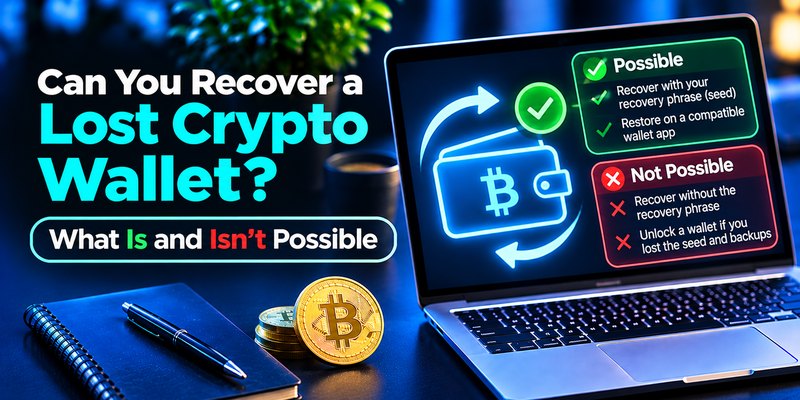
Yes, often. The real question is not whether the device is lost but whether you can still prove control of the keys. Before following any guide on how to recover a lost crypto wallet, use this table to see where you stand.
| What you still have | Recovery outlook | What to do |
|---|---|---|
| Full seed phrase | High | Restore in an official wallet app |
| Private key | High | Import carefully, then consider moving funds to a new wallet |
| Keystore (JSON) file plus password | High | Decrypt locally with trusted software |
| Old phone or computer, wallet still unlocked | Medium to high | Back up or export credentials through the official wallet settings |
| Browser extension still unlocked | Medium to high | Reveal the backup only inside the genuine extension |
| Working hardware wallet with a known PIN | Conditional | Move funds to a new wallet before the device fails or resets |
| Encrypted device or cloud backup plus password | Conditional | Restore only on a trusted device with official software |
| Partial seed phrase or partial password | Low | Specialist tools may help, with no guarantee |
| Public address or transaction history only | None | An address cannot regenerate a private key |
Once you know your row, you know how to recover a lost crypto wallet in your situation, or whether recovery is realistic at all. If you fall into the last row, be skeptical of anyone claiming they can help. An address and a transaction history prove nothing about who can sign transactions.
The most reliable way to avoid permanent wallet loss is to prepare a recovery method before an emergency. Our step-by-step guide on how to back up a crypto wallet explains which recovery information to preserve, how to verify a backup safely, and why wallet-specific requirements matter.
How to Recover a Lost Crypto Wallet With a Seed Phrase
If you have your seed phrase, this is the simplest case. The process takes a few minutes and works whether you lost your device, deleted the app, or are switching to a new wallet. Here is how to recover a lost crypto wallet when the phrase is safe:
- Work in a private, trusted environment. Use a clean device and never let anyone watch the screen or share it remotely.
- Install the official wallet. Download from the provider’s verified website or app store. A fake app that asks for your phrase hands your funds to a thief.
- Choose the restore option. Look for wording such as “Restore wallet,” “Import wallet,” or “I already have a wallet.”
- Enter the words in exact order. One wrong, misspelled, or misplaced word creates a different wallet or fails completely. Most apps flag words that are not on the standard list.
- Set a new password. This only protects the wallet on the current device. You can choose a new one even if you forgot the old password.
- Check balances and networks. If tokens are missing, add the correct blockchain network or account index before assuming anything is lost.
If your old device was stolen while unlocked, or you suspect the phrase was exposed, create a brand-new wallet with a fresh seed phrase and move your funds there after restoring. That is the core of how to recover a lost crypto wallet when a seed phrase exists. Fake wallet applications and recovery websites may imitate legitimate providers to steal recovery phrases. Before entering any wallet secret, follow our guide on how to avoid phishing scams to recognize fraudulent download pages, suspicious support messages, and requests to submit private keys through untrusted websites.
Read more: How to Identify a Scam Text Message Without Opening the Link
How to Recover a Lost Crypto Wallet Without a Seed Phrase
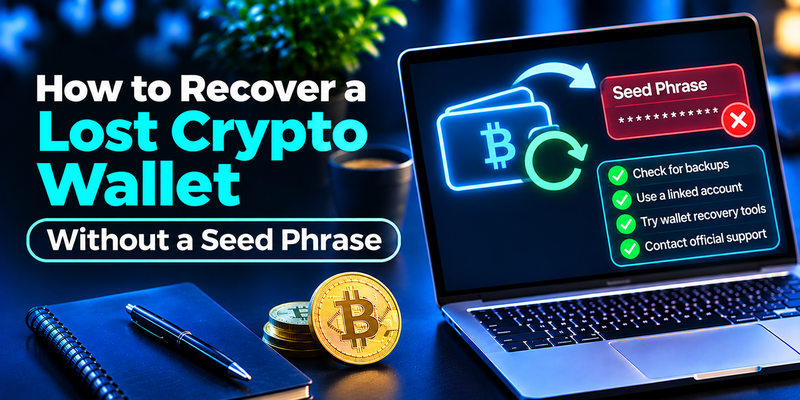
Losing the written seed phrase is not always the same as losing every recovery method. Before giving up, check each option below. Knowing how to recover a lost crypto wallet without the phrase starts with taking inventory of what remains.
How to recover a lost crypto wallet with a private key
Importing the correct private key restores control of that one address. Use only the official wallet app, never paste it into a website, and consider moving funds to a fresh wallet if the key was ever stored in screenshots, cloud notes, or chats.
How to recover a lost crypto wallet with a keystore file and password
Ethereum-style wallets often export an encrypted JSON (keystore) file. With the file and its password, trusted local software can decrypt it. The file alone is not enough, and you should never upload it to a “recovery” website.
How to recover a lost crypto wallet from an old phone or computer
An original device may still have the wallet installed and unlocked. Open only the official app, look for a “reveal recovery phrase” or backup option in the settings, and write the words down offline. If nothing can be exported, create a new wallet with a properly backed-up phrase and transfer the funds across while you still have access.
How to recover a lost crypto wallet from an unlocked browser extension
A genuine extension may let you view or export backup data if you still know the local password. Beware of fake extensions, malicious “wallet verification” pages, and search ads when you go looking for the official version.
How to recover a lost crypto wallet when your hardware wallet still works
If the device powers on and you know the PIN, do not reset it and do not rush into firmware updates. Create a new wallet, write its seed phrase offline, and move assets while the old device can still sign transactions.
How to recover a lost crypto wallet with a partial seed phrase
Open-source tools can sometimes fill small gaps, for example one missing word in a known position, correct words in the wrong order, or a forgotten extra passphrase. If many words are missing, the number of combinations quickly becomes impossible to search.
Search every physical place first
Before spending money on any service, check drawers, safes, envelopes, notebooks, and storage boxes. Lost seed phrases turn up more often than most people expect. For exchange accounts and other password-based services, a trusted password manager app can help prevent forgotten credentials by securely storing unique passwords. However, an account password manager cannot recreate a missing self-custody seed phrase or decrypt an unknown wallet password without the required recovery information.
How to Recover a Lost Crypto Wallet Stored on a Hardware Device
A hardware wallet is a secure key holder, not a vault for coins. If it is lost, damaged, or dead, your assets remain on the blockchain, so how to recover a lost crypto wallet of this type mostly comes down to your backup.
- Lost or broken device, seed phrase available: buy a new compatible hardware wallet (any BIP-39 device works), choose the restore option, enter your words, and your balance appears. You do not need the old device.
- Forgotten PIN: most devices wipe themselves after a set number of wrong PIN attempts. After the wipe, you restore using your seed phrase on the same or a new device.
- Lost device and forgotten PIN, seed phrase available: this is not a problem, because the PIN protects the device and the seed phrase is the true master key.
- Physically damaged device: contact the manufacturer first. Some offer repair or guidance, and a few specialist labs can work on damaged boards, but hardware wallets are built to resist tampering, so results vary.
- No seed phrase and no working device: recovery is usually impossible with a traditional wallet.
Some newer wallets offer extra recovery layers such as backup cards, encrypted NFC tags, or trusted-contact recovery. If yours does, check exactly what it supports before you need it.
How to Recover a Lost Crypto Wallet With a Forgotten Password
First, confirm what you forgot. If you have the seed phrase, a forgotten wallet password is only a minor setback: restore the wallet and set a new password. The harder case is an encrypted wallet file (such as a wallet.dat or keystore) with no seed phrase.
Strong encryption cannot be cracked when you remember nothing, which limits how to recover a lost crypto wallet protected by an unknown password. But if you recall the password’s length, structure, candidate words, or usual patterns, recovery tools can shrink the search space from billions of options to something testable. Services and tools in this area typically work on your encrypted file, not on your seed phrase or private key. Reputable providers explain the odds honestly, charge per case or take a share of what is recovered, and never demand crypto upfront.
Use only trusted tools from reputable sources, ideally run offline on a clean computer. A careless password tool can expose your wallet data and turn a bad situation into a worse one.
Read more: Password Manager vs Browser AutoFill: Which Should Hold Your Logins?
How to Recover Stolen Crypto After a Hack or Scam
Theft is different from losing access. Blockchain transactions are final, so there is no way to reverse a transfer, and recovery is never guaranteed. Still, quick action improves your chances:
- Stop the damage. Move any remaining funds to a new wallet, change passwords, and revoke suspicious token approvals.
- Document everything. Save transaction IDs, wallet addresses, timestamps, screenshots, and every message related to the incident.
- Trace the funds. Use a blockchain explorer to follow the stolen assets and set alerts on the thief’s address.
- Notify exchanges. If the funds reach an exchange, it may be able to freeze them.
- Consider a blockchain analysis firm. Forensic firms can trace stolen assets, and a successful trace can lead to a freeze.
- Report to the authorities. File a police report and use your national fraud or cybercrime reporting channel, such as the FBI’s IC3 in the United States or Action Fraud in the United Kingdom. Share the evidence you collected.
- Talk to a lawyer. An attorney experienced in cyber theft and digital assets can explain your options.
- Be careful about going public. Warn the community without revealing sensitive details, and expect scam DMs from fake “recovery experts.”
Costs and time add up, so weigh them against the amount lost. The honest truth is that many thefts are never reversed. Note that how to recover a lost crypto wallet and how to recover stolen funds are different questions, because theft means a third party now controls your assets.

Are Crypto Wallet Recovery Services Legitimate? How to Spot Scams
Scammers know that people searching for how to recover a lost crypto wallet are stressed and willing to try anything. Some professional services are legitimate, but they are narrow. They can help you get back into a wallet you own when you forgot a password, or get a faulty hardware wallet working again. They cannot reverse a transaction, recreate a seed phrase you never recorded, or take back money from a thief. Anyone who claims otherwise is lying.
| Red flag | What it looks like | Safe response |
|---|---|---|
| Guaranteed recovery | “We can recover any wallet” | Treat it as a scam |
| Upfront payment | Fees in crypto before any result | Do not pay |
| Seed phrase or private key request | A form or “technician” asks for your words | Refuse and close the page |
| Screen sharing | Someone wants to watch your wallet | Never allow it |
| Unsolicited DMs | “Support” contacts you on Telegram, Discord, or X | Ignore and report |
| Address-only claims | “We can recover it from your address” | Impossible, so walk away |
Never share your seed phrase, private key, wallet password, 2FA codes, device passcode, cloud backup credentials, or remote access to your device. Legitimate support never needs them. Report recovery scams to your local fraud authority.
How to Prevent Losing Your Crypto Wallet Again
Prevention is the only reliable form of recovery, and the best answer to how to recover a lost crypto wallet is making sure you never have to. Build these habits before you need them:
- Write the seed phrase on paper or metal, offline. Number the words and avoid screenshots, email drafts, cloud notes, and chat apps.
- Keep at least two copies in separate secure places. This protects against fire, theft, and flood.
- Test your backup. Restore on a spare device with a small amount before storing serious funds.
- Use cold storage for long-term holdings. Hardware wallets keep keys offline, which blocks most remote attacks.
- Keep software wallets small. Hold only spending money in internet-connected wallets.
- Consider multi-signature wallets for large balances. Requiring two or more keys removes single points of failure.
- Protect exchange and email accounts with an authenticator app. App-based two-factor authentication is stronger than SMS codes, and you should save your 2FA backup codes in a safe place so a lost phone does not lock you out. Remember that 2FA protects accounts, not your seed phrase.
- Stay quiet about your holdings. Public bragging makes you a target for scams and hacking attempts.
- Install wallets only from official sources. Fake apps and extensions are a common theft method.
Read more: What Is a Password Manager? A Plain-English Guide to Vaults and AutoFill
FAQ: How to Recover a Lost Crypto Wallet
Can you recover lost crypto wallets?
Often yes, but only if a valid recovery credential still exists. Your coins stay on the blockchain even when a device is lost, so a seed phrase, private key, keystore file with password, or still-unlocked device can bring the wallet back. If the device, seed phrase, and every other backup are gone, recovery is generally impossible because non-custodial wallets have no central reset.
I lost $16,000 when my cryptocurrency was stolen. How can I recover it?
Recovery is never guaranteed, because blockchain transactions cannot be reversed. At that amount, it is reasonable to act quickly: secure your remaining funds, document every transaction ID and address, trace the funds on a blockchain explorer, alert any exchange that receives them, and file reports with the police and your national fraud channel. A blockchain analysis firm or a lawyer experienced in digital assets may be worth consulting. Avoid anyone who guarantees results or asks for a fee upfront, since “recovery” scammers target theft victims. This is general information, not legal advice.
Can I recover my Bitcoin wallet if I don’t have the recovery phrase?
Sometimes. It depends on what else you have. A private key, a wallet file with its password, an unlocked old device, or a working hardware wallet with a known PIN can all provide a path back in. If you remember most of the phrase or password, specialist tools may fill in the gaps. With only a public address or transaction history, or with nothing at all, the funds cannot be recovered.
How can I recover my lost wallet?
Here is how to recover a lost crypto wallet in short: identify what you lost first. If you have the seed phrase, install the official wallet app, select restore, enter the words in order, and set a new password. If you lost a hardware wallet, buy a compatible device and restore with the phrase. If you forgot a password, use the seed phrase or recover the password from clues you remember. If funds were stolen, document, trace, and report. In every case, never share your seed phrase or private key with anyone offering help.
Conclusion
Now you know how to recover a lost crypto wallet in each common scenario. The pattern is consistent: your assets remain on the blockchain, and recovery depends on proving control of the keys through a seed phrase, private key, keystore file, or working device. When none of those exist, no service can help, and offers that promise otherwise are usually scams.
If your wallet is working today, remember that the easiest way to recover a lost crypto wallet is to prepare in advance. Take ten minutes to back up your seed phrase offline, store a second copy elsewhere, and secure your exchange accounts with an authenticator app. That small effort means you may never need this guide again.