
Cold Wallet vs Hot Wallet: Where Should You Keep Crypto?
Published November 10, 2026
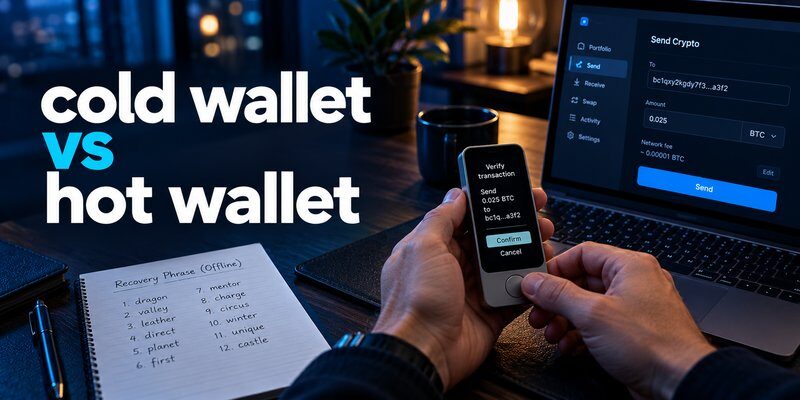
Cold wallet vs hot wallet: which is safer for storing your cryptocurrency? A cold wallet keeps private keys offline or isolated from internet-connected environments, while a hot wallet manages keys in an online-connected environment for faster access to crypto transactions. Cold wallets are generally better suited for long-term storage, whereas hot wallets offer greater convenience for everyday payments, trading, and decentralized applications.
The best option depends on how much cryptocurrency you hold, how often you need to access it, and how securely you can manage your private keys and recovery information.
In this guide, we’ll compare cold wallet vs hot wallet security, costs, advantages, disadvantages, and real-world use cases to help you choose the right cryptocurrency storage method.
Cold Wallet vs Hot Wallet: Quick Comparison
The main difference between a cold wallet and a hot wallet is the environment in which private keys are stored and used to authorize transactions.
Cold wallets keep signing keys offline or isolated from internet-connected devices. Hot wallets typically use software operating on connected devices, making transactions more convenient but potentially increasing exposure to online threats.
| Feature | Cold Wallet | Hot Wallet |
|---|---|---|
| Internet connectivity | Private keys kept offline or isolated | Keys used in connected environments |
| Security | Stronger isolation from remote attacks | Greater exposure to online threats |
| Convenience | Requires additional signing steps | Quick access to funds |
| Cost | May require hardware purchase | Often free to install |
| Transaction speed | More manual confirmation | Generally faster to use |
| Best for | Long-term cryptocurrency storage | Daily transactions and DeFi |
| Private key protection | Offline or dedicated signing environment | Depends on connected device security |
| Main risks | Recovery phrase theft, physical loss, malicious signing | Malware, phishing, compromised devices |
| Recovery | Offline backups or supported recovery methods | Recovery phrase or wallet-specific methods |
| Examples | Hardware wallets, offline signing systems | Mobile wallets, browser extension wallets |
Quick verdict: A cold wallet is generally the better choice for long-term cryptocurrency holdings because it reduces direct exposure of private keys to online attacks. A hot wallet is more convenient for smaller balances and frequent transactions.
Many experienced cryptocurrency users combine both approaches, keeping long-term holdings in cold storage and maintaining a separate hot wallet for everyday activity.
Read more: What Is a Multi Signature Wallet? How It Works, Benefits & Risks
Secure your accounts with fast, reliable two-factor authentication. Download now and protect your login in seconds.Download Authenticator App
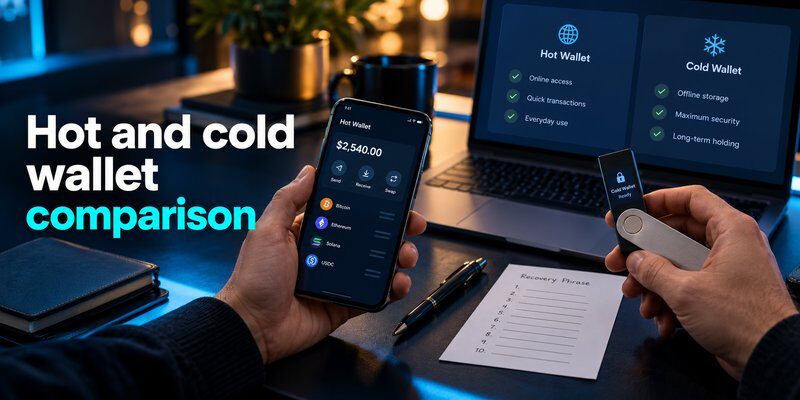
What Is a Cold Wallet?
A cold wallet is a cryptocurrency wallet arrangement that keeps private keys offline or within an isolated signing environment, reducing their exposure to internet-connected devices.
Cold wallets are commonly used for long-term cryptocurrency storage because they limit opportunities for remote attackers to access signing keys directly.
Understanding cold wallet vs hot wallet security begins with how each type protects private keys.
How Does a Cold Wallet Work?
A cold wallet protects cryptocurrency by keeping private keys separate from ordinary internet-connected computing environments.
For example, a hardware wallet can sign transactions internally without revealing its private key to the connected computer.
A typical transaction process includes:
- Preparing a transaction using compatible wallet software.
- Sending the unsigned transaction to an offline or isolated signer.
- Reviewing the transaction details through a trusted verification method.
- Signing the transaction using the protected private key.
- Broadcasting the signed transaction through a connected device.
The signing key does not need to be exposed to the online computer during this process.
However, cold storage cannot prevent every security threat, especially if users reveal their recovery phrases or approve fraudulent transactions.
Types of Cold Wallets
Common cold storage approaches include:
Hardware wallets: Dedicated devices designed to protect private keys and perform signing operations in an isolated environment.
Air-gapped wallets: Signing systems that remain physically disconnected from internet-connected networks and transfer transaction data through controlled methods.
Paper-based key storage: Physical records of private keys or recovery information. These can preserve secrets offline but require additional tools and procedures to safely access and spend cryptocurrency.
Not every offline backup is a complete, usable wallet. A recovery phrase written on paper is primarily a backup unless it is part of a functioning wallet arrangement.
For more information, read what is a cold wallet and best cold wallets for crypto.
Advantages of Cold Wallets
Cold wallets offer several security benefits:
- Reduced online exposure: Private keys are not directly accessible to ordinary internet-connected applications.
- Stronger key isolation: Dedicated signing environments can protect keys from compromised computers.
- Long-term storage: Suitable for cryptocurrency that does not need frequent transfers.
- Physical transaction confirmation: Many hardware wallets require users to approve transactions on the device.
- Flexible custody arrangements: Cold signing devices can support certain multisig configurations.
These advantages make cold storage attractive for users holding substantial cryptocurrency assets.
Disadvantages of Cold Wallets
Cold wallets also introduce practical challenges:
- Hardware devices may require an upfront purchase.
- Transactions can involve additional steps.
- Device compatibility varies by blockchain and cryptocurrency.
- Losing recovery information can make funds inaccessible.
- Physical damage or theft can create recovery problems.
- Users may still approve malicious or incorrect transactions.
Cold storage improves private-key isolation but does not eliminate operational and recovery risks.

What Is a Hot Wallet?
A hot wallet is a cryptocurrency wallet that manages private keys within an environment connected to the internet.
Hot wallets are commonly available as mobile applications, desktop programs, and browser extensions.
They allow users to send, receive, and interact with cryptocurrency services without retrieving a separate offline signing device.
This convenience is one of the biggest differences in the cold wallet vs hot wallet comparison.
How Does a Hot Wallet Work?
A hot wallet typically generates or imports private keys and uses them to authorize transactions directly through the wallet application.
A standard workflow involves:
- Installing a trusted cryptocurrency wallet application.
- Creating a wallet or importing an existing one.
- Securing the application and device.
- Backing up the recovery phrase or supported recovery credentials.
- Sending cryptocurrency or connecting to supported decentralized applications.
Because the wallet operates in an online-connected environment, it may be exposed to malware, phishing, malicious extensions, or compromised devices.
Types of Hot Wallets
Common examples include:
Mobile wallets: Cryptocurrency applications installed on smartphones for payments, transfers, and everyday account management.
Desktop wallets: Wallet applications running on computers that provide access to cryptocurrency balances and transactions.
Browser extension wallets: Wallets integrated with browsers to interact with decentralized exchanges, NFT platforms, and other Web3 applications.
Examples of popular software wallet products include MetaMask and Trust Wallet, although individual products may support hardware-wallet integrations or other security architectures.
Advantages of Hot Wallets
Hot wallets provide several practical benefits:
- Easy access: Manage cryptocurrency directly from your phone or computer.
- Fast transactions: Initiate and approve transfers without a separate signing device.
- Low setup cost: Many hot wallets are free to install.
- DeFi compatibility: Convenient connections to supported decentralized applications.
- Beginner accessibility: Straightforward interfaces for learning cryptocurrency transactions.
For smaller balances and frequent activity, hot wallets are often more convenient than cold storage.
Disadvantages of Hot Wallets
The primary disadvantage of a hot wallet is increased exposure to online threats.
Potential risks include:
- Malware that targets wallet applications or private keys.
- Phishing websites that request recovery phrases.
- Malicious browser extensions.
- Compromised devices or operating systems.
- Fraudulent smart contract approvals.
- Unauthorized transactions after private-key exposure.
These risks can be reduced through secure device management and careful transaction verification, but they cannot be eliminated completely.
Read more: Best Hardware Wallet for Crypto in 2026: Top Picks, Safety Guide and How to Choose
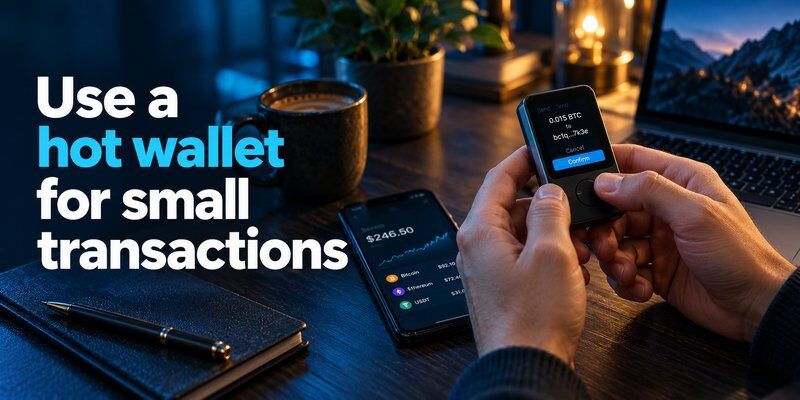
Cold Wallet vs Hot Wallet: 6 Key Differences
When evaluating cold wallet vs hot wallet options, six factors are especially important: security, connectivity, convenience, cost, recovery, and transaction frequency.
Security and Online Threats
Cold wallets generally provide stronger protection against remote private-key theft because signing keys remain offline or isolated from connected computing environments.
Hot wallets operate in environments where malware, phishing attacks, and compromised applications may pose greater risks.
However, both wallet types can lose funds through stolen recovery phrases or malicious transactions.
Winner: Cold wallet for reducing direct exposure of private keys to online threats.
Internet Connectivity
A cold wallet does not require its private keys to be exposed to the internet to authorize transactions.
For example, a hardware wallet can sign a transaction while connected software communicates with the blockchain.
A hot wallet typically operates on a device with internet access, allowing users to interact directly with cryptocurrency services.
Winner: Cold wallet for private-key isolation; hot wallet for convenient online access.
Convenience and Accessibility
Hot wallets allow users to manage cryptocurrency quickly through applications or browser extensions.
Cold wallets generally require additional steps to prepare, verify, and authorize transactions.
For someone making several transfers each day, these additional steps may become inconvenient.
Winner: Hot wallet for frequent transactions.
Cost and Setup
Many hot wallet applications are free to download.
Cold storage may require purchasing a hardware device or maintaining a separate offline signing system.
Both approaches can incur blockchain network fees when cryptocurrency is transferred.
The total cost depends on the wallet design, supported networks, and security requirements.
Winner: Hot wallet for lower initial setup cost.
Recovery and Backup
Both cold and hot wallets require reliable recovery arrangements.
Many self-custody wallets use recovery phrases that can reconstruct access to private keys.
If a recovery phrase is stolen, an attacker may be able to control the wallet regardless of whether the original device was offline.
If recovery information is lost and the wallet becomes inaccessible, the cryptocurrency may be unrecoverable.
Winner: No universal winner. Backup quality and recovery procedures determine resilience.
Long-Term Storage vs Daily Transactions
Cold wallets are generally better suited to assets that remain untouched for extended periods.
Hot wallets are more practical for cryptocurrency used in payments, decentralized applications, and frequent trading.
Separating these purposes can reduce the amount of cryptocurrency exposed to everyday online activity.
Winner: Cold wallet for long-term storage; hot wallet for daily transactions.
Read more: Biometric Banking in 2026: How It Works, Benefits, Risks, and Setup
Cold Wallet vs Hot Wallet: Which Is Safer?
In most conventional self-custody scenarios, cold storage provides stronger protection against direct online private-key theft than a typical hot wallet.
However, the security difference depends on how the wallets are implemented and used.
Can a Cold Wallet Be Hacked?
Yes. A cold wallet can still be compromised through stolen recovery phrases, physical attacks, vulnerable firmware, or malicious transactions approved by the owner.
A hardware wallet may protect its private key from a compromised computer, but it cannot automatically determine whether every destination or smart contract is trustworthy.
Users should verify transaction details through trusted device displays or other documented verification methods.
Can a Hot Wallet Be Hacked?
Yes. Hot wallets can be affected by malicious software, phishing websites, compromised devices, and fraudulent transaction requests.
An attacker who obtains the private key or sufficient recovery information may be able to transfer cryptocurrency without the owner’s permission.
Using official wallet software, maintaining updated devices, and reviewing transaction permissions can reduce some of these risks.
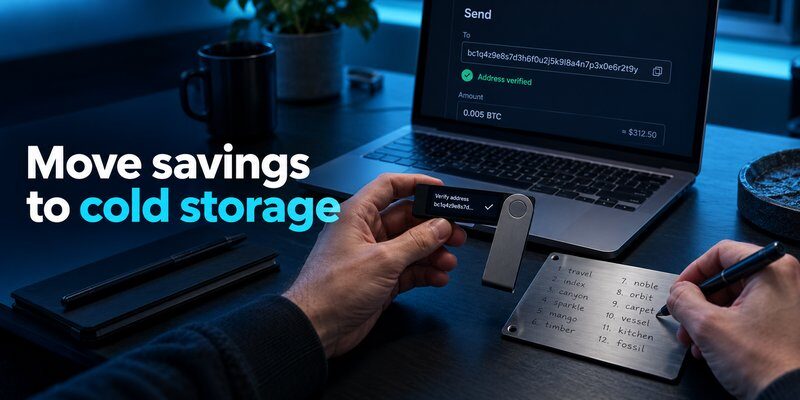
What Happens If a Recovery Phrase Is Stolen?
A recovery phrase can allow someone to reconstruct the wallet’s private keys.
This means even cryptocurrency associated with a cold wallet may be stolen if its recovery phrase is exposed.
If exposure is suspected, create a fresh wallet with new recovery information and move remaining funds after verifying the destination.
Learn more about how to protect your seed phrase and how to secure a crypto wallet.
Cold Wallet vs Hot Wallet: Which Should You Choose?
The best choice depends on how frequently you use cryptocurrency and how much risk you are prepared to manage.
| Your situation | Recommended option | Main reason |
|---|---|---|
| Long-term cryptocurrency investor | Cold wallet | Reduced online key exposure |
| Beginner learning crypto | Hot wallet with small funds | Simpler setup |
| Frequent cryptocurrency payments | Hot wallet | Convenient transactions |
| DeFi and Web3 activity | Hot wallet with limited balance | Easy application access |
| Significant self-custody holdings | Cold wallet | Stronger key isolation |
| Business cryptocurrency treasury | Cold signing with multisig | Distributed authorization |
| Long-term savings and daily trading | Both | Separation of security and convenience |
Choose a Cold Wallet If…
Cold storage may be appropriate if you:
- Hold cryptocurrency for months or years.
- Manage funds whose loss would be financially significant.
- Prefer stronger isolation from internet-connected devices.
- Can securely maintain offline recovery backups.
- Do not need frequent access to your holdings.
For users prioritizing long-term storage, a properly configured hardware wallet is often a practical cold storage option.
Choose a Hot Wallet If…
A hot wallet may be more suitable if you:
- Make frequent cryptocurrency transactions.
- Use decentralized exchanges or Web3 applications.
- Hold relatively small amounts for everyday activity.
- Need convenient access through a phone or computer.
- Are learning how cryptocurrency wallets work.
Avoid keeping more cryptocurrency in a hot wallet than your security practices can reasonably protect.
Can You Use a Cold Wallet and Hot Wallet Together?
Yes. Using both wallet types can provide a practical balance between security and convenience.
For example:
- Cold wallet: Store long-term cryptocurrency holdings.
- Hot wallet: Maintain a limited balance for everyday payments, trading, or decentralized applications.
When funds are needed, transfer only the required amount from cold storage to the hot wallet.
This approach helps limit exposure without requiring every transaction to use the long-term storage wallet.
Cold Wallet vs Hardware Wallet: What’s the Difference?
Cold wallet and hardware wallet are related terms, but they are not identical.
A cold wallet describes a storage arrangement that keeps private keys offline or isolated.
A hardware wallet is a physical device designed to protect private keys and authorize cryptocurrency transactions.
Hardware wallets are commonly used as cold signing devices, but other offline signing arrangements also exist.
Similarly, a software wallet is not automatically a hot wallet in every implementation. Software operating in a permanently offline signing environment can form part of a cold storage arrangement.
The distinction is important when comparing cold wallet vs hot wallet security because connectivity and key exposure matter more than whether the wallet is physically tangible.
For a detailed comparison, read hardware wallet vs software wallet and what is a hardware wallet.

How to Move Crypto From a Hot Wallet to a Cold Wallet
Moving cryptocurrency into cold storage requires careful setup and address verification.
The following steps describe a general self-custody transfer process.
Step 1: Set Up Your Cold Wallet
Choose a compatible hardware wallet or other trusted cold signing arrangement.
Follow the manufacturer’s official setup instructions and generate new recovery information using the supported procedure.
Do not use a recovery phrase supplied by a seller or an unsolicited website.
Step 2: Secure Your Recovery Phrase
Record the recovery phrase accurately and store it offline in a secure location.
Avoid screenshots, cloud storage, and messages containing recovery information.
Confirm that you understand how the wallet can be restored before transferring significant funds.
Step 3: Verify the Receiving Address
Generate a receiving address using your cold wallet.
Confirm the address through the device’s trusted display or the wallet’s documented verification process.
Check that the selected blockchain network and cryptocurrency are supported.
Step 4: Send a Small Test Transaction
Transfer a small amount from your hot wallet to the verified cold wallet address.
Wait for the transaction to receive the appropriate blockchain confirmations.
Check that the funds appear in the intended wallet.
Step 5: Transfer the Remaining Funds
After confirming the test transfer, move the intended cryptocurrency balance.
For larger transfers, consider moving funds in stages.
Verify the destination address and network before every transaction.
Step 6: Maintain Secure Backups
Keep recovery information protected and periodically confirm that your recovery arrangements remain usable.
Do not enter a cold wallet recovery phrase into an online software wallet simply to make transactions more convenient.
For more detailed instructions, read how to set up a hardware wallet.
Common Cold Wallet and Hot Wallet Security Mistakes
Even experienced cryptocurrency users can make mistakes that compromise their funds.
| Common mistake | Why it is risky | Safer approach |
|---|---|---|
| Keeping all funds in a hot wallet | Greater exposure to online threats | Separate long-term holdings |
| Photographing a recovery phrase | Creates potentially accessible digital copies | Maintain secure offline backups |
| Using an unverified wallet application | May expose keys or transaction information | Download from official sources |
| Skipping recovery tests | Can make device loss difficult to recover from | Verify restoration procedures |
| Approving unknown smart contracts | May authorize malicious asset transfers | Review permissions carefully |
| Trusting copied addresses | Malware may replace destination addresses | Verify through trusted displays |
| Reusing a cold wallet seed online | Removes key isolation benefits | Keep cold recovery information offline |
Cold wallet vs hot wallet security ultimately depends on both the storage architecture and the user’s ability to protect keys, verify transactions, and recover access safely.
Frequently Asked Questions
What Is the Main Difference Between a Cold Wallet and a Hot Wallet?
The main difference is private-key connectivity. Cold wallets keep signing keys offline or isolated from internet-connected environments, while hot wallets generally manage keys through connected applications or devices.
Is a Cold Wallet Safer Than a Hot Wallet?
A cold wallet generally offers stronger protection against direct online private-key theft. However, both wallet types can be compromised through stolen recovery phrases, fraudulent transactions, or poor security practices.
Is a Hardware Wallet a Cold Wallet?
Hardware wallets are commonly used for cold-key storage because they isolate private keys from connected computers. However, their exact security properties depend on the device architecture and how it is used.
Can a Cold Wallet Be Hacked?
Yes. Cold wallets can be compromised through recovery phrase theft, physical attacks, software vulnerabilities, or malicious transactions approved by the owner. Cold storage reduces certain risks but does not guarantee complete protection.
Is MetaMask a Hot Wallet or Cold Wallet?
A conventional MetaMask software-controlled account is generally considered a hot wallet because its keys are managed in an online-connected software environment. MetaMask can also connect to compatible hardware wallets, which provide a different signing security model.
Should I Keep All My Crypto in a Cold Wallet?
Not necessarily. Cold storage is often appropriate for long-term holdings, while a limited hot wallet balance can be useful for frequent transactions. The right allocation depends on your needs and risk tolerance.
Can I Transfer Crypto From a Hot Wallet to a Cold Wallet?
Yes. You can send cryptocurrency from a hot wallet to a verified address controlled by your cold wallet. Confirm the network, destination address, and supported asset before transferring funds.
Is a Crypto Exchange a Hot Wallet?
A cryptocurrency exchange account is generally a custodial service rather than a self-custody wallet. Exchanges may use combinations of hot and cold storage internally, while customers access balances through account-based controls.
Final Thoughts
The cold wallet vs hot wallet decision depends on how you balance cryptocurrency security, accessibility, cost, and transaction frequency.
Cold wallets generally provide stronger private-key isolation and are well suited for long-term holdings. Hot wallets offer greater convenience for daily payments, decentralized applications, and frequent transactions.
For many cryptocurrency users, combining both approaches is practical: keep long-term assets in a properly secured cold wallet and use a separate hot wallet for routine activity.
Regardless of your choice, protecting recovery phrases, verifying transaction details, and testing wallet recovery are essential for maintaining cryptocurrency security.