
Best Authentication Services in 2026: Tools Compared
Published October 13, 2026 · Updated October 21, 2026
The best authentication service helps developers add secure login, user management, and account recovery without building an entire identity system from scratch. From passwordless sign-in and social login to multi-factor authentication and passkeys, modern authentication platforms support different security and development needs.
In this guide, we compare six authentication services for websites and mobile apps in 2026: Auth0, Clerk, Firebase Authentication, Supabase Auth, Amazon Cognito, and Stytch. Explore their features, pricing models, advantages, and limitations to find the right solution for your project.
Choose a Service by the Login You Need to Ship
| Service | Common starting point | MFA and passkey check | Team trade-off |
| Auth0 | Hosted Universal Login and broad identity options | Test policy, branding and account recovery | Flexible configuration needs governance |
| Firebase Authentication | SDK-based app integration and common social sign-in | TOTP MFA requires Identity Platform upgrade | Rapid integration but product-specific limits |
| Amazon Cognito | User pools and AWS-managed login | Managed login differs from classic hosted UI | Rich configuration, more AWS concepts |
| Clerk | Prebuilt sign-in components and user management | Test TOTP, backup code and passkey flows | Fast UI integration, vendor-specific model |
There is no meaningful winner without an app brief
A consumer social app may value fast sign-up and familiar social providers. A regulated B2B application may need enterprise federation, strict administrative policy and a detailed offboarding trail. Another product may have anonymous guest accounts that later become registered users. Write down which identity types you support today and which ones are likely within the next year. Then prototype the hard flow, not only the default email/password page.
Separate authentication from authorization
The service can establish who signed in. Your app must still decide what that person may do with a document, workspace or payment method. A valid token is not blanket permission to read another customer’s data. Design tenant membership, roles and resource checks explicitly, then test an account moved between teams. This boundary often matters more than the visual polish of the hosted login screen.
The best authentication service depends on whether you need customer login, workforce identity management, single sign-on, or multi-factor authentication. If your organization is comparing enterprise identity platforms, our guide to the best authentication providers explains how to evaluate identity governance, authentication methods, integrations, and recovery requirements.
Which option should you choose?
Choose Auth0 when you need adaptable hosted customer login with several identity connections and can govern that configuration. Choose Firebase Authentication when your app is already centered on Firebase and standard mobile/web sign-in paths fit the product. Choose Amazon Cognito when AWS integration and a user-pool model fit your team; test its hosted UI and recovery flows with real users before committing. An enterprise workforce access project belongs in Entra or Okta evaluation instead of this consumer-login shortlist.
A free-tier headline does not answer the purchasing question: compare monthly active user costs, MFA method availability, account migration, API limits, and help-desk time on the same forecast. Run the same registration, lost-device, account merge and deletion scripts on two candidates. The winner is the platform that meets those paths while leaving a workable exit route, rather than the one with the shortest demo setup.
Secure your accounts with fast, reliable two-factor authentication. Download now and protect your login in seconds.Download Authenticator App
Hosted Login or Custom UI
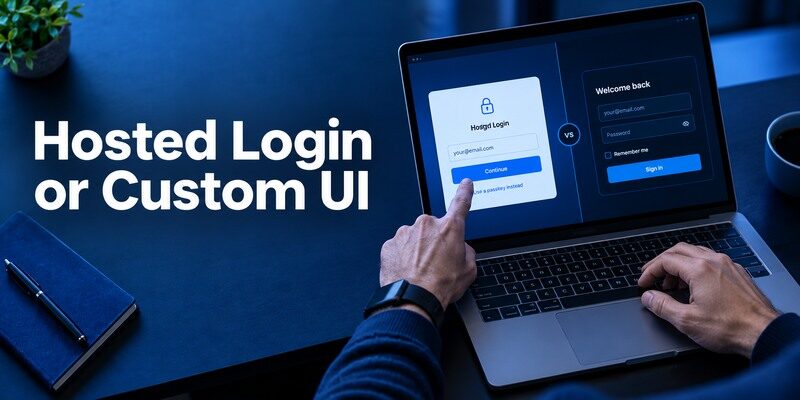
Hosted pages can remove much of the sign-in interface and flow handling from the application. Auth0 describes Universal Login for signup, reset and MFA; Cognito documents managed login; Clerk provides prebuilt components. Each has different customization and integration boundaries. An embedded form can match a product’s design, but it also increases the work needed to handle error states, accessibility, redirects and security-sensitive UI changes.
Follow redirects all the way back
In a test environment, sign in on a clean browser, cancel an MFA prompt, refresh during a redirect and return after the session expires. Check the final destination, error message and whether the browser keeps a safe state. A successful demo login can hide problems with cross-domain cookies or mobile deep links. Record the expected session lifetime and renewal behavior; do not treat the authentication service’s default as your product policy.
Customization is a maintenance obligation
Teams often start with a heavily customized login page to match their brand. Ask which fields and transitions the service owns and which your code must update when a new passkey or verification method appears. Test on a narrow phone screen and with keyboard navigation. An elegant primary screen that cannot explain a locked account or a replacement-phone prompt adds support burden. Hosted components can still be branded within supported limits; choose the extent of customization deliberately.
An authentication service manages how users prove their identity, while an authenticator app is one possible tool for completing a verification step. These are related but different components of a login system. Our guide on what is an authenticator app explains how temporary verification codes work and how they fit into multi-factor authentication.
Map Every Account Creation Path
Social login can create duplicates
A person may first sign up with email/password and later choose a Google or Apple button using the same email address. Depending on your service and configuration, that may create a second account, request linking or produce a blocked sign-in. Decide how identity linking works and what proof is required before two accounts are merged. Never merge solely because an email string matches without understanding the provider’s verification and your own threat model.
B2B invitations need a tenant owner
An invitation link, an enterprise SSO assertion and a self-service signup can all lead to a user with the same display name. Determine who is allowed to invite someone, which organization they join and what happens when that invitation expires. Test the person who leaves one organization but retains access to a second. Your data model, not the code app on the user’s phone, must enforce the organization boundary.
Guest migration deserves a rehearsal
A user may accumulate data before creating credentials. When the guest becomes registered, verify which cart, settings or documents move with them. A failed or interrupted registration should not orphan data or attach it to the wrong account. Use test fixtures with meaningful content, not an empty welcome screen. These cases help distinguish services whose SDK ergonomics truly fit your app from those that only look attractive in a feature table.
Many authentication services support time-based one-time passwords as an additional sign-in factor. TOTP can be useful for broad compatibility, although it does not provide the same phishing resistance as properly implemented passkeys or hardware security keys. Our guide to a TOTP authenticator app explains how time-based codes are generated, enrolled, and verified.
Design MFA as an Account Lifecycle
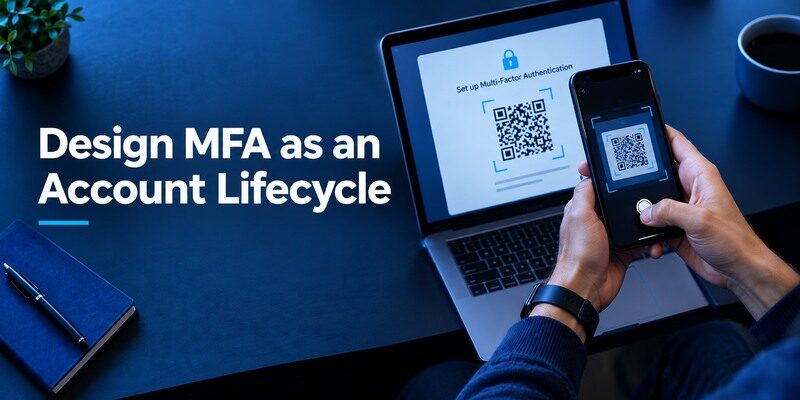
Adding TOTP is a sequence: display a new secret once, let the user scan it with a compatible app, verify a current code, issue recovery options and log the enrollment. Firebase documents TOTP MFA for Identity Platform; Clerk describes TOTP and backup-code flows; Auth0 and Cognito have their own configuration and tier requirements. The product team must decide when MFA is optional, when it is required and how the decision is communicated.
Do not mistake SMS for an app code
Phone verification, email OTP, TOTP and passkeys have different delivery and recovery paths. A TOTP app calculates a code locally from an enrolled secret. A phone message depends on a reachable number. A passkey uses a credential bound to the legitimate service under its supported platform flow. NIST’s guidance treats phishing resistance as a property of the authentication protocol, not a generic synonym for “two steps.” Label each factor correctly in the app and support materials.
Test enrollment and removal together
If the user replaces a phone, can they add a second factor while the old one works? If the old phone is lost, which recovery code or approved identity check permits reset? When a factor is removed, are remembered devices and sessions reviewed? Simulate all three cases. A service can provide an MFA API while the app still presents a dangerously permissive “disable” button or offers no way to tell the user what changed.
For organizations using Microsoft Entra ID, authentication policies and end-user verification methods work together. Microsoft Authenticator can support approved Microsoft sign-in flows as well as standard TOTP codes for compatible services. Our guide on how to use Microsoft Authenticator explains account enrollment, sign-in approvals, verification codes, and recovery considerations.
Test a security change across all sessions
Choose Auth0 when you need adaptable hosted customer login with several identity connections and can govern that configuration. After a user changes a password or reports a stolen device, what happens to existing mobile sessions and API tokens? A login service can issue a new token while older sessions remain valid until expiry or explicit revocation. Ask the vendor how applications receive revocation signals and whether your own backend must enforce them. Test on a staging account with a web browser and a mobile app logged in simultaneously. The best authentication service for an app should let the team explain the sequence to support and users in plain language.
Prevent an MFA reset from becoming a bypass
An attacker unable to supply a TOTP code may target the account recovery process. Model who can remove a factor, what proof is required and how the account owner is notified. Separate a routine phone transfer from a lost-device recovery in the design. Record audit events without logging the underlying TOTP seed or recovery codes. A help-desk exception may be necessary, but its approval path should be explicit and testable before launch rather than invented during the first customer lockout.
Account Recovery Is Part of the Contract
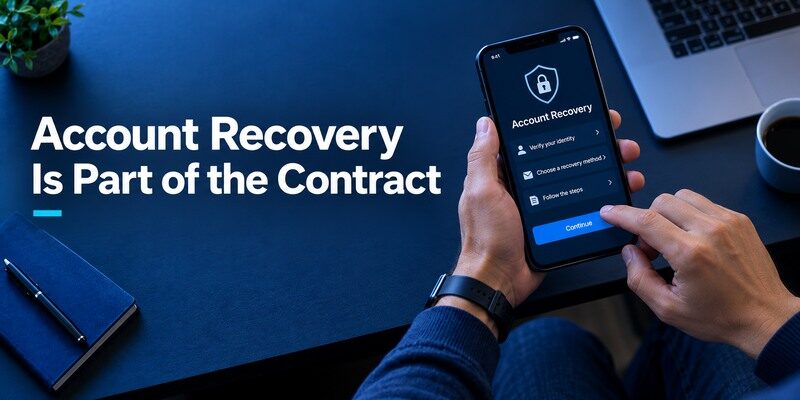
| Event | Service feature to inspect | Product decision |
| Forgotten password | Reset channel and expiry | How do you verify ownership of email? |
| Lost authenticator phone | Backup code or alternate factor | Who may remove the old method? |
| Compromised email | Stronger proof or support workflow | What stops an attacker resetting the account? |
| Deletion request | Identity and data lifecycle | What is revoked and what is retained? |
Recovery can undo strong MFA
If support can remove a factor after a casual email request, a strong login policy offers little resistance to social engineering. Define an identity-verification process, restrict who can approve exceptions and record the action. Then test a legitimate user who has lost both phone and email access. The safe outcome may take longer and require more evidence; communicate that expectation before an emergency.
Recovery codes should be usable and finite
When a service issues one-time codes, tell the user to store them somewhere outside the phone that holds the TOTP app. Mark a used code as consumed and offer replacement codes when appropriate. Do not show the entire set again in a public support chat. For your QA team, create a test account with only one remaining recovery code, consume it and verify that the app does not imply the old set still works.
Ask whether support can observe why a recovery attempt failed without seeing a user’s secret. A useful audit trail names the enrollment event, approved reset and session revocation, while limiting access to the staff who need to investigate.
Evaluate Integration and Exit Costs
Inspect how user IDs, social-provider identifiers and MFA enrollments are represented. Can the team export users if it changes services later, and what secrets cannot be exported by design? What happens to existing sessions during a migration? A provider may allow user profile export while still requiring password reset or re-enrollment of strong factors. Plan those communications and support needs into the selection, not as an afterthought once an invoice is signed.
Examine the exact SDK path
Build one representative web or mobile flow with the framework you actually ship. Check documentation for error codes, account-linking behavior, telemetry and accessibility. A backend-only proof of concept cannot reveal a broken mobile deep link or a confusing passkey prompt. Assign one developer and one support reviewer to walk through the same test account; they will notice different failures.
Request pricing for the traffic pattern
Consumer products can have bursts of sign-ups and many inactive accounts. Ask vendors how they meter active users, MFA methods, SMS delivery, custom domains and enterprise connections under current plans. Do not assume a free development tier represents production cost. Model a normal month and a launch spike, then compare proposals using the same units. This article intentionally avoids quoted prices because they change and depend on tier.
Ask the developer team to exercise failure paths
A vendor’s quickstart often covers the happy path: click sign in, receive a token, open the application. Have the implementation team test an expired invitation, a duplicate email, an account merged after a name change and a session revoked from another device. Check where errors are shown to the user and how much actionable detail reaches operations without exposing secrets. The best authentication service for an app gives engineers a way to diagnose such failures and gives the product team sensible recovery screens. A polished hosted login alone does not solve account matching.
Exportability is an architectural requirement
Ask what user identifiers, MFA enrollments and recovery status can be exported if the organization changes providers. A new service may accept user profiles while requiring every customer to re-enroll their authenticator factor; that is a substantial support event. Document the expected migration path, whether passwords can be moved safely, and how customers will verify the change. Test one account end to end in a staging environment before relying on a marketing claim of portability. Leaving a service can cost more than integrating it.
Make the recovery flow observable
Measure how many customers abandon password reset, lose their second factor or contact support after an account merge. Build clear audit events for factor enrollment and removal, with alerts around unusually frequent changes. Never log TOTP seeds or backup codes to make debugging easier. The support team needs enough evidence to identify a stuck workflow, not a copy of the credential. This separation makes the eventual customer experience safer and more maintainable.
Where a Mobile Authenticator Enters the Flow
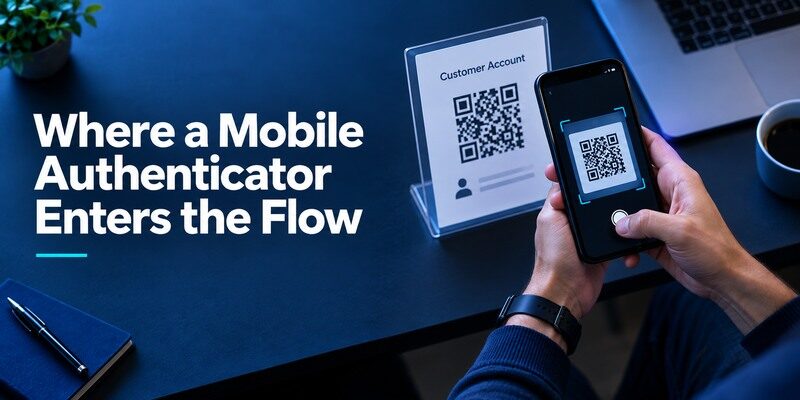
If your service supports standard TOTP, the user chooses a compatible app to hold the issued secret. describes QR/manual entry and offline code generation, so it can be evaluated as a personal TOTP client. The authentication service remains responsible for issuing and verifying the secret, deciding whether TOTP is permitted, and enforcing backup or reset policy. A six-digit app cannot by itself add passkeys, session revocation or federation to your product.
For a real acceptance test, enroll one test account through the product’s security settings, scan the QR in the app, sign out and sign in from another browser. Rotate the factor, verify the old code stops working and use a recovery path. The gives users current platform information; your product should never require a brand of authenticator unless the method genuinely depends on it.
Frequently Asked Questions
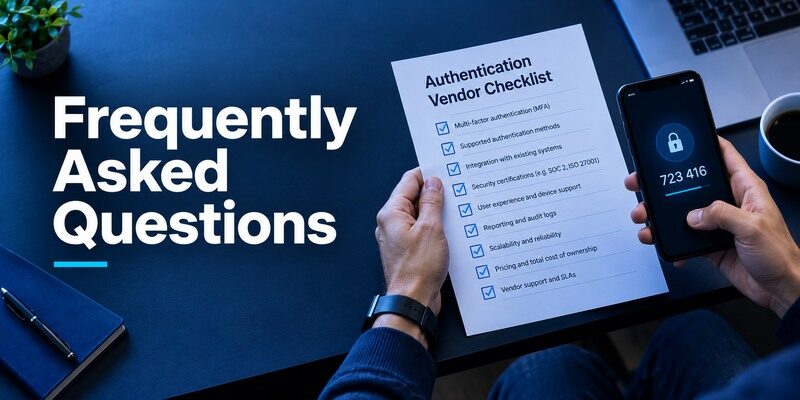
Is Firebase Authentication always the best free choice?
No. Feature access, quotas and cost depend on the current plan, and the required account and recovery flows matter more than a single entry-tier price.
Can I change authentication services later?
Often, but migration may require re-enrolling factors, moving profiles and resetting sessions. Test the export and cutover path before committing.
Does a hosted login remove all security work?
No. Your app still owns authorization, sensitive-action checks, support procedures and safe integration with the provider’s session model.
Can Begamob act as the backend authentication service?
Its described role is generating enrolled TOTP codes for compatible sites. It is not a substitute for a service that manages users and verifies your app’s sign-ins.
Should I require passkeys instead of TOTP?
That depends on supported users and devices. Test passkey enrollment and recovery, and retain an approved fallback for people who cannot use that path.
Final Thoughts
A free-tier headline does not answer the purchasing question: compare monthly active user costs, MFA method availability, account migration, API limits, and help-desk time on the same forecast.
Pick the best authentication service by proving the entire identity lifecycle for your app, including the unglamorous reset and revocation cases. Auth0, Firebase, Cognito and Clerk can each be a sound fit in the right architecture; a shortlist becomes useful only after a tested integration. A mobile code app such as can participate when the chosen service offers standard TOTP, while the service remains the authority that validates the login.