
Bank of America Authenticator App Options for Sign-In and Transfers
Published November 18, 2026
If you are looking for a Bank of America authenticator app, start with the official Mobile Banking app and the Security Center for your account. Bank of America documents a mobile-app sign-in option using Digital ID, additional security options such as passkeys, and a USB security key for supported uses. Its USB key guidance also describes texted one-time security codes. Follow the method the bank actually offers for your account and the action you are trying to complete.
A third-party rotating-code app is useful only when a provider documents a compatible enrollment. Bank of America’s public consumer security pages describe its own supported routes. For a sign-in or transfer, check the live prompt before downloading anything or trying to substitute another app.
Identify the Bank of America Authenticator App Prompt You Have
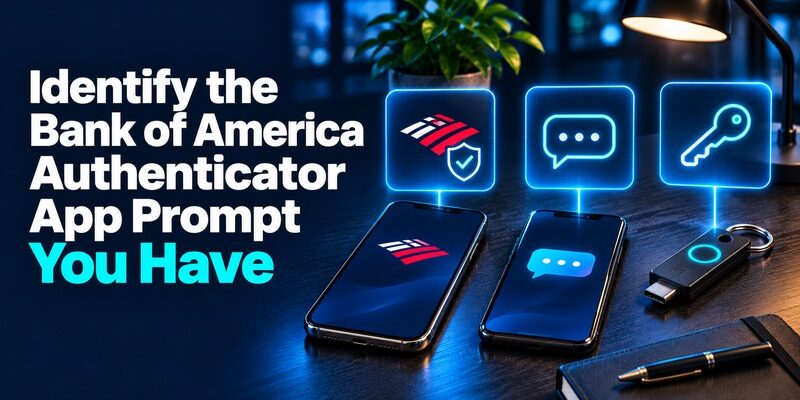
| Prompt or setting | What it can mean | What to use |
|---|---|---|
| Log in with mobile app | A bank-provided Digital ID sign-in flow when offered | The official Bank of America Mobile Banking app and the current instructions |
| One-time security code | A delivered proof for the challenge the bank started | The current value sent to the destination the bank shows |
| Passkey option | A registered credential for eligible sign-ins | The device or credential provider selected in the official setup |
| USB security key prompt | An extra security check for an eligible operation | A registered compatible key and supported browser |
| Biometric unlock on the phone | A local check in the mobile experience | The device’s approved Face ID, fingerprint, or unlock method |
Start With the Service and the Action
Open Bank of America through a trusted bookmark or the official app. Verify whether you are signing in, adding a recipient, making a transfer, or changing contact information. The bank can use different checks for different operations. A Bank of America authenticator app question can refer to a mobile approval, a delivered one-time code, or another bank-supported credential.
If you use both personal and business banking, confirm which portal owns the prompt. A business treasury product may have different credentials and security procedures. Use the instructions for the actual account you are trying to access. Do not attempt to enroll a retail security method using a work portal or use another person’s credential to complete the request.
Verify the App Name and Official Publisher
If the bank asks you to use its mobile app, navigate from the bank’s official site or use the app store listing linked by Bank of America. Check the name and publisher before installing. A code app with banking-related words in its title is not evidence of compatibility. Use the bank’s live Security Center to verify your options.
Keep the original bank prompt visible and follow its directions. If you see a code from the bank but are asked by someone else to read it aloud, leave it unused and return to the official service. Bank of America provides fraud and security guidance for unexpected contact and suspected account activity. For other websites that explicitly support standard TOTP enrollment, a compatible authenticator app such as Authenticator App by Begamob is an option to evaluate. However, Bank of America customers should use only the verification methods offered through the bank’s official Mobile Banking app and Security Center. Do not assume a third-party TOTP app can replace Digital ID or another bank-issued credential.
Secure your accounts with fast, reliable two-factor authentication. Download now and protect your login in seconds.Download Authenticator App
Use Digital ID or Another Sign-In Method the Bank Offers
Follow the Official Mobile-App Sign-In Choice
Bank of America’s Security Center describes a Log in with mobile app choice after saving a User ID in an eligible flow. The option uses Digital ID to continue the sign-in with the official app. Follow the current instructions on your devices and confirm the request corresponds to a login you started. Availability and exact screen wording can depend on the account and device.
A Bank of America authenticator app request in this flow belongs to the bank’s app. It is a different procedure from scanning a QR into a general-purpose code app. If the mobile option is missing, use another approved method the bank offers or contact the bank through its official support route. Before enabling a new sign-in method, learn what is a passkey and how cryptographic credentials work. Passkeys can use a supported device or credential provider to verify access without manually entering a rotating code. Availability and enrollment requirements for Bank of America must still be confirmed in the bank’s official Security Center.
Check Passkey Availability in Security Center
Bank of America’s additional security features page lists passkeys. Open the official account settings and check whether the option is offered on your device. Follow the enrollment prompts and verify which device or credential provider will hold the passkey. A passkey may use local device verification as part of sign-in.
Before relying on a passkey, test a fresh sign-in through the intended browser or app. Check how you will recover the credential after replacing a device. A passkey and a Bank of America authenticator app flow are separate ways the bank may offer to verify access. Use the one the actual screen presents.
Keep Mobile Unlock Separate From Account Recovery
A biometric prompt on a phone can help unlock the banking app or verify use of a credential, depending on the screen. It does not establish that you can recover an account from an unfamiliar device. Review the bank’s actual recovery options while you still have a working sign-in, especially if you rely on a single phone.
If the phone stops recognizing your biometric, follow the bank’s offered alternate method and the device’s approved unlock instructions. Check whether the issue affects the app, the account, or a particular transaction. Describe that difference when contacting support.
Read more: Auth0 MFA Configuration for Universal Login and User Recovery
Review Enhanced Two-Factor Authentication in Security Center
Check When the Bank Will Verify You
Bank of America’s Security Center says it automatically verifies identity at various points in Online Banking and the Mobile Banking app. Its enhanced two-factor setting calls for verification every time you log in to those experiences. Open the official Security Center and see whether the option is available for your account. Review the current contact information before enabling or changing it.
This setting answers a different question from selecting a Bank of America authenticator app. One concerns when the bank asks for proof, while the other concerns which proof the bank offers. Test both parts in a fresh sign-in after an authorized change. Confirm the prompt appears in the expected place and the intended device or contact can complete it.
Compare the Browser Options Listed for Your Account
The Security Center describes Digital ID and Windows Hello in its browser enhancement area and says a saved User ID is needed for those documented options. Follow the live bank instructions for your device. If you use an approved personal computer, check whether the bank offers verification with the mobile app or Windows Hello on that computer.
Avoid saving a User ID on a shared or borrowed device just to make an option appear. If you cannot use a browser method, use another bank-supported route and verify it independently. A Bank of America authenticator app choice that works on one device may be unavailable on a different browser or account. To understand the technology behind many modern hardware authenticators, read our guide on what is FIDO2. FIDO2 supports phishing-resistant public-key authentication, but you should not assume that every USB security key supported by Bank of America uses the same protocol or works for every banking operation.
Verify That the Change Matches Your Usual Workflow
Test the desktop and mobile sign-ins you actually use. Confirm what happens after the setting is enabled, including when you start from an unfamiliar device. If the Bank of America authenticator app option involves another device, make sure that device is reachable when you need it. Verify that the bank can still reach your contact details for an eligible delivered challenge.
Keep the last working route until the separate sign-in passes. If you contact the bank about a missing setting, describe the account type, device, and action without sharing sensitive values. Record the test date and type of verification for your own reference.
Read more: Twitch Authenticator App Setup and Phone Number Recovery
Use a Delivered Code Only for the Bank’s Active Challenge
Check the Destination and the Action First
When the bank offers a one-time security code, read the destination and the operation named by the official screen. Check that you can reach the number or channel it shows. Enter the value only in the bank’s live prompt for the action you started. A code delivered for another transaction or sign-in may not belong to this request.
If the number is outdated, use the official profile or recovery route. A Bank of America authenticator app download cannot redirect an SMS or change the contact information the bank has registered. Preserve a working session and check the bank’s current instructions before retiring an old number.
Treat a Missing Text and an Unrequested Text Differently
For a missing code, verify the destination, wait for the stated interval, and follow the bank’s resend or alternative option. Check whether your phone can receive messages and whether the carrier recently changed the number or SIM. If you cannot use the current number, contact the bank through a route you can verify independently.
For an unexpected code, leave it unused. Open Bank of America directly and review recent activity or contact official support. If a person claims they need the value to prevent a transfer, end the interaction and check with the bank yourself. Keep the live code and passwords private. Different multifactor authentication methods provide different forms of verification, including delivered codes, mobile approvals, passkeys, and hardware credentials. Bank of America’s enhanced two-factor setting determines when additional verification is requested, while the bank’s available security options determine which method can complete the challenge.
Check Whether a USB Security Key Fits Your Account
Use the Bank’s Current Compatibility and Registration Instructions
Bank of America’s USB Security Key guidance describes a compatible physical key as an optional alternative to SMS-based one-time codes for eligible use. It also describes extra security for certain transfer types and other supported checks. Verify which operations and devices are supported for your account before buying a key or changing methods.
If Security Center offers registration, follow the bank’s current instructions with a compatible key and browser. When a supported challenge asks for the key, use the registered device and follow the browser and bank prompts. The Bank of America authenticator app and USB key may appear in different situations. Check the specific operation before expecting either one.
Test a Supported Sign-In and Know the Transfer Requirements
After registration, verify the bank recognizes the key in an approved sign-in or setup test. Review whether the bank uses it for the transfer or recipient action you intend to take. There is no need to move money just to verify that a security setting is present. Consult the bank’s current instructions if a transfer needs additional proof.
Keep the key under the account owner’s control and ask which recovery routes the bank offers if it is lost. Check whether an alternate proof can serve the same purpose or only restore ordinary sign-in. A Bank of America authenticator app option that opens the account may not satisfy the same check as an eligible transfer key.
Read more: Venmo 2FA for New Devices, Phone Changes, and Account Recovery
Recover Access After a Phone or Number Change
| What changed | First route to check | What to confirm afterward |
|---|---|---|
| New phone, same number | Official Mobile Banking sign-in and current device setup | The intended phone can complete the bank’s prompt |
| New number | Bank profile and verification settings | The bank can reach the new contact and the old contact is handled |
| Missing device used for Digital ID | Bank-supported alternate or official support | The replacement is registered and tested |
| Lost USB key | Security Center and approved recovery | An available method can complete the intended operation |
| Unexpected change or transaction | Bank of America’s official fraud route | The bank reviews account access and affected activity |
Keep the Working Device Until the Replacement Passes
Before a planned move, confirm the User ID and current contact information. Keep the old phone available if you can. Install the official app on the replacement and follow the bank’s verification prompts. A restored app icon does not show that the Bank of America authenticator app or Digital ID enrollment is complete.
Test a separate sign-in from the device you intend to keep. Review the available security methods and the registered contact. If you also use a USB key or passkey, check its support on the replacement. Verify the method independently before you return the old device or give up the number.
Use the Official Recovery Route if You Cannot Verify
Open Bank of America independently and use its official help for the specific account. Explain whether the phone or number is unavailable, whether a current browser session works, and what method the prompt asks for. Keep private codes out of ordinary messages and provide sensitive information only through the bank’s approved process.
After recovery, review the registered methods, devices, and contact information. Confirm the account you intended to reach and whether any action still needs a separate check. A Bank of America authenticator app verification can restore access without resolving a separate transfer restriction or suspected fraud case. A general two-factor authentication app may generate codes for websites that support standard TOTP, but Bank of America’s Digital ID sign-in uses the bank’s own supported mobile experience. Follow the official banking prompt rather than trying to substitute a third-party code generator.
Distinguish Sign-In Recovery From a Transaction Issue
Check Whether You Can Reach the Account at All
If you cannot sign in, focus on the account’s current verification and recovery options. If you can open Online Banking but a transfer or recipient action is blocked, read the separate message. Bank of America’s key guidance describes additional verification for certain operations. The appropriate support team may depend on which action failed.
Record the date, device, operation, and nonsecret error details. Avoid including a full account number, live code, or security key PIN in a casual support message. For an urgent transaction, confirm the official route and expected proof before attempting repeated changes to a working sign-in method.
Avoid Treating a Generic Code App as a Bank Credential
For another website that explicitly offers standard TOTP enrollment, is an option to evaluate. Use that service’s official security settings and test the code. For Bank of America, follow the bank’s published Mobile Banking, passkey, one-time code, and key routes where offered. Verify the Bank of America authenticator app prompt through Security Center before relying on any third-party download.
If a caller or email asks you to install an unfamiliar app to cancel a payment or regain access, stop and open the official bank site independently. Use the bank’s fraud instructions if activity is unexpected. The device you use to verify a legitimate sign-in should stay under your control.
Read more: MYOB Authentication App Setup for Your MYOB ID
Prepare the Device and Contact You Will Need Away From Home
Check the Supported Route Before Travel or a Carrier Change
If you expect to change phones, travel, or transfer your number, open the official account ahead of time and verify the options it displays. A Bank of America authenticator app sign-in through Digital ID, a passkey, or another registered proof may depend on an eligible device. The bank’s current Security Center guidance also asks users to keep their email address and phone number up to date for delivered codes.
If you expect limited access to a U.S. mobile number, review the bank’s current USB key guidance for the operation you use. Confirm compatibility and the supported use before purchasing or traveling with a key. A Bank of America authenticator app flow that verifies ordinary sign-in and a key check for a transfer may be different tests.
Keep the Bank’s Support Route Available Independently
Save the official starting point or keep trusted banking materials accessible. If a Bank of America authenticator app request fails, contact the bank independently. Explain whether a new device, new number, or separate transaction prompted the verification. An agent can use that context without receiving a current code.
If a device or contact becomes unavailable unexpectedly, review account activity through an authorized route and follow the bank’s fraud process if appropriate. Confirm the replacement device can reach the correct account and the bank can verify the intended operation. Treat an unexpected Bank of America authenticator app request as a reason to check the account independently.
If the bank offers a test during setup, complete it before you leave. Then verify a separate browser sign-in and check which proof it presents. Record the result without copying the verification code. This gives you a way to tell whether a later failure is limited to the new device, the contact route, or the operation you need.
Final Thoughts
Look for the Bank of America authenticator app option in the official app or Security Center, then use the proof the bank requests for that account and action. Digital ID, passkeys, delivered codes, and USB security keys apply to different supported situations.
Before changing devices or numbers, confirm the new method in a fresh sign-in. If the account is locked or activity is unexpected, use the bank’s official support or fraud route and keep live verification values private.
