Best Authenticator App for Android: Compare Local Vaults and Sync
Published September 29, 2026 · Updated October 5, 2026
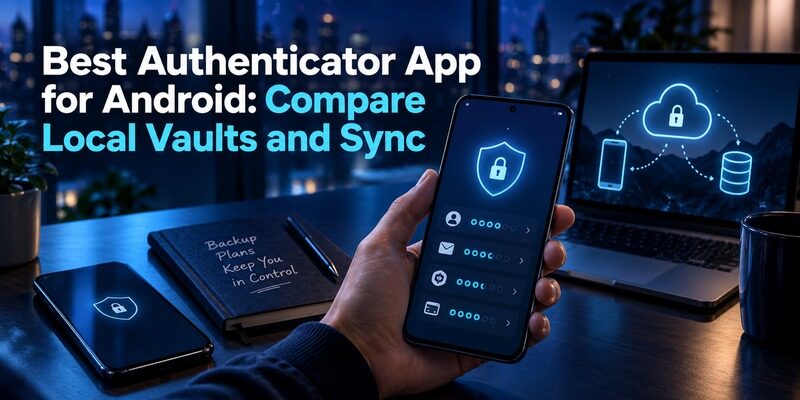
The best authenticator app for Android depends on whether you want an encrypted local vault, account-based sync or an easy path to another operating system. Aegis is a strong Android-local choice; Ente suits cross-device access; Google Authenticator and 2FAS offer different documented backup routes. Begamob is a mobile TOTP candidate to evaluate in its current Android listing. Before installing anything, decide how you would replace a broken phone. The number of stars in a store listing will not reveal whether you can open your codes after the device is gone.
Reviewed: September 2026. Features here are based on official Aegis, Google, 2FAS, Ente and Begamob information. Android manufacturer backup behavior and store terms should be checked on the devices in use.
Prioritize a Recoverable Android Setup
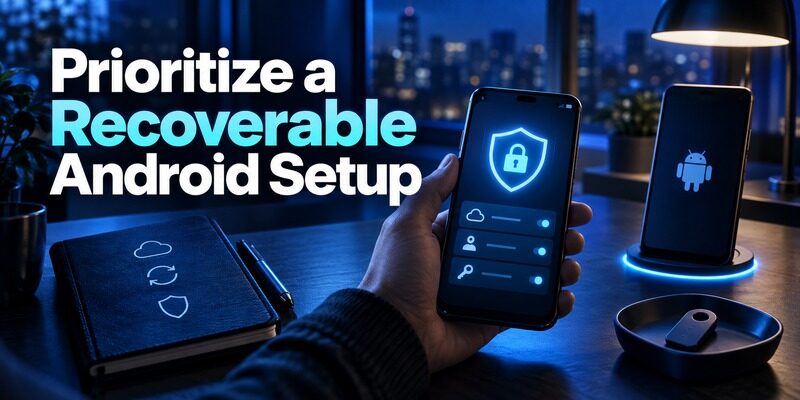
Visual overview: Prioritize a Recoverable Android Setup
Android work profiles and personal profiles can keep apps and data apart. If an authenticator app was installed inside a managed work profile, your personal Google backup may not include its entries, and company policy can block direct exports. Check the profile badge and ask the administrator how a replacement handset is registered. For personal apps, identify which Google Account, local file or independent sync account holds the backup. A new Android phone with the same screen layout tells you little about whether a secret crossed the profile boundary. Make a real sign-in test before erasing the old handset.
Map the accounts that unlock other accounts
Begin with email, your password manager and the Google account used for device backup. If their only second factors sit on the phone you might lose, recovery can become circular. Add an independent method or securely save issuer backup codes where the service offers them. The authenticator’s own cloud backup may depend on that same Google account, so test that you can regain it without the missing handset.
Decide who holds the backup key
A local encrypted export gives you custody of a file and password. Signed-in synchronization transfers the dependency to an account and its device sessions. Platform cloud backup adds Google Drive or another service. None is inherently correct for every person. Choose the route you can maintain, then try restoring a low-risk entry on an authorized spare Android phone. A green backup indicator without a successful login is only a partial test.
A person who plans to switch to iPhone next year should also ask about cross-platform transfer now. Aegis is Android-only; a platform-specific 2FAS backup may not travel to another OS in the same way; Ente documents multi-platform access. This one future-device question can narrow the field faster than dozens of interface screenshots.
A replacement test can be done without putting your primary accounts at risk. Enroll a low-value site on your current phone and save its newly issued recovery codes. On a spare handset, follow the exact restore method promised by your preferred app. Sign in once with the new handset, then repeat after the code rotates. If you cannot access a spare, document the needed cloud account, export location and password, and keep the original Android phone until the upgrade is verified. The purpose is to find the first failure point while you still have options.
For a work-managed account, ask the administrator whether a different phone or authenticator requires re-registration. An Android app that can read a standard QR is not necessarily allowed to approve an employer’s device-bound prompt. Leave that factor in its authorized workflow while comparing personal TOTP apps. This separation makes a consumer-app experiment reversible and keeps a work lockout out of the equation. Write the administrator contact in a place available during phone replacement, not only in the old handset.
Best Authenticator App for Android Comparison Table
| App | What it is good for | Recovery dependency | Limitation to acknowledge |
| Aegis | Local encrypted Android vault and export | Vault password and protected backup file | No iPhone app |
| Google Authenticator | Optional Google Account sync or local use | Selected Google Account or manual transfer | Mode can be overlooked |
| 2FAS Auth | Free mobile codes with Google Drive backup option | Cloud account or protected export | Browser extension is phone-paired |
| Ente Auth | Encrypted sync across platforms | Ente account or offline export by mode | More account/device management |
| Begamob | Dedicated mobile TOTP workflow | Verify current app backup and issuer codes | Do not assume undocumented migration |
Compare recovery, not code strength slogans
For a website using standard TOTP, the same secret and clock produce compatible codes. The app choice affects where that secret is stored, how you find it, and what happens after phone loss. Aegis’s local-first design differs substantially from Google’s signed-in sync even if both show the same six digits. Read the table as a map of dependencies, then test the model that fits your devices.
Keep the publisher identity in view
Store search results can contain similarly named authenticators. Use each project’s official site to reach its current listing, compare the publisher name and read the store’s purchase and privacy details. Begamob’s publisher page lists an Android “Authenticator App – 2FA”; verify the exact current listing before installation. Never type an issuer setup key into an app selected solely by a familiar icon.
Use Aegis When Local Vault Control Matters
Aegis offers an Android-focused encrypted vault, organization tools and export. It appeals to someone who wants direct custody without an ongoing sync account. That control brings responsibility: protect the vault password and export a backup that you can locate after a phone loss. Do not keep the only backup in a folder that is automatically erased with the device. Test importing a noncritical entry into a spare Android phone, then verify the site accepts its code.
Local-first is not no-backup
People sometimes interpret a local vault as a reason never to create a copy. That makes the phone itself a single point of failure. An encrypted export stored in a controlled location can preserve local-first custody while allowing replacement. Keep the file’s password separate and review whether a new export is needed after adding high-value accounts. A stale backup may omit the most recent TOTP secret.
Know when Android-only becomes a constraint
If you expect an iPhone move, Aegis will not simply install there. Plan service-side re-enrollment or a documented compatible export path before wiping the Android phone. The decision can still favor Aegis today; it simply needs an exit plan. Do not base the move on the fact that both operating systems display six-digit codes, because migration formats and backup dependencies are separate from TOTP compatibility.
Use Google Authenticator When Google Sync Fits
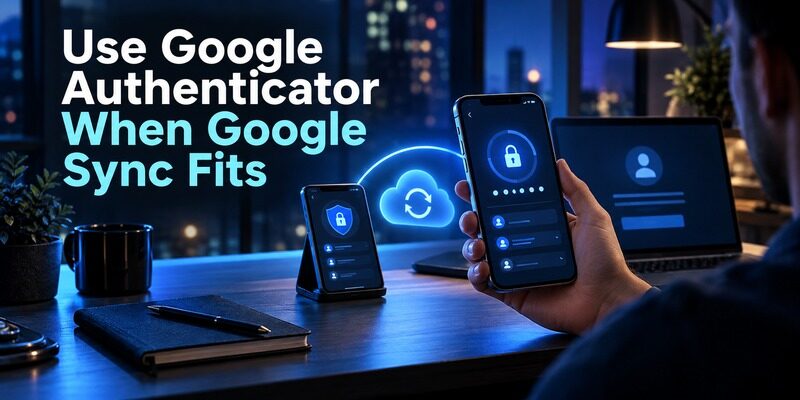
Visual overview: Use Google Authenticator When Google Sync Fits
Google documents optional account sync for Authenticator and account-free local use. If you use signed-in sync, protect the Google Account with a separate recovery method and check which account is selected inside the app. A work and personal Google Account can look similar on a phone but produce different code collections on a replacement. On a spare device, sign in to the intended account and test a fresh website login.
If you prefer local mode, use Google’s documented transfer flow while the old device works or re-enroll through each issuer. Do not rely on a new installation to reconstruct local secrets. Google’s Privacy Screen can add access friction, but a stolen-phone response also requires locking the device and reviewing account sessions. A synchronized collection is convenient only when the account that holds it remains recoverable independently of the missing phone.
Use Ente When You Cross Operating Systems
Multi-platform codes solve a real device problem
Ente Auth documents end-to-end encrypted synchronization among mobile, desktop and web. For an Android user who also owns an iPhone or needs desktop access, that is a meaningful distinction from an Android-only vault. Enroll one recoverable website, verify a new code on both devices and check that the same issuer and username appear. A second view is not enough if the restored entry contains a secret the website has since replaced.
Offline Ente is a separate choice
Ente also supports account-free offline use, which does not automatically provide the same sync path. If you choose that mode, establish a protected export and issuer recovery. If you choose sync, protect the Ente account and its encryption credentials without depending exclusively on this Android phone. The product offers both models; you still have to choose and maintain one deliberately.
Compare 2FAS Backup With Browser Pairing
Visual overview: Compare 2FAS Backup With Browser Pairing
2FAS Auth describes a free, open-source code app and an optional Android Google Drive backup route. Check which Google account owns the backup and whether its password protection is configured as intended. Perform a replacement-phone test before relying on it. A protected export offers another route, but the file and its password need careful storage. An export that cannot be located or unlocked is not useful recovery.
The 2FAS browser extension is paired with the phone, making desktop logins convenient while the handset is available. It is not a stand-alone desktop vault to replace a lost mobile device. Try a real browser login and see what approval or code action remains on Android. If you need independent desktop codes, Ente’s documented desktop access is a different model. Choose based on the actual desk routine, not the mere existence of an extension.
Verify Which Begamob Android App You Found
Begamob’s product site describes QR/manual TOTP enrollment, multiple accounts and offline codes; its publisher listing identifies an Android authenticator. To avoid a lookalike app, follow the official publisher path and compare the developer name, icon, current permissions and terms in the store. Keep the supplied iOS link for iPhone users, but do not present it as an Android install link. This is a small publishing detail with a direct security consequence: the setup QR contains a reusable secret.
Trial a personal account that has backup codes. Add Begamob through that website’s own factor settings, label the entry clearly and complete two fresh sign-ins. Then inspect its current Android backup or export controls and simulate a replacement route if available. If you cannot establish one, keep issuer recovery codes and limit the trial. Do not attribute Aegis’s vault encryption or Ente’s sync to Begamob because their interfaces all show a shield.
Choose Between Offline Codes and Offline Recovery
Visual overview: Choose Between Offline Codes and Offline Recovery
A device in airplane mode can still show the next TOTP value if its clock and secret are present. That is a useful travel property, but it says nothing about whether an empty replacement handset can recover the same secret. For Aegis, inspect the vault export and password; for Google, check whether you chose signed-in sync or local mode; for Ente, identify offline-only versus account mode. For 2FAS, inspect the relevant platform backup. Apply the same question to Begamob’s current controls. A practical offline test should distinguish code generation, access to the protected backup file, and the eventual website sign-in.
| Scenario | Offline code generation helps? | What else is needed? |
| No mobile signal, existing entry on phone | Yes | A connected site to accept the code |
| Phone destroyed, blank replacement | No | Backup, export or issuer recovery |
| Cloud account unavailable | Existing local codes may work | Independent access to backup account |
| Clock is wrong | Code may be rejected | Automatic accurate device time |
Offline TOTP is useful while traveling, but it is a narrow capability. Test it by putting the authenticator phone in airplane mode while using another connected device to reach a low-risk website. If the site accepts a fresh code, you verified local generation. You did not verify the restoration of a blank phone. Keeping those tests separate prevents an “offline” marketing phrase from hiding an unprepared lost-device scenario.
Migrate From an Existing App Carefully
The hardest cases are services that no longer accept a normal login because the old factor is already broken. Handle those through their official recovery route first; scanning a different app cannot reconstruct an unknown secret. For accounts you can still open, record the issuer and username, save fresh recovery codes and change the factor from its own security settings. Check at least one fresh code on the new Android phone. Keep old and new devices physically distinct during the test so you know which app supplied the accepted code. This prevents a supposed migration from succeeding only because the old phone silently remained in use.
Import formats are product-specific
Aegis export, Google’s transfer QR, 2FAS backup and Ente export are not automatically the same file. Confirm that the destination explicitly supports the source format. If it does not, change each site’s authenticator through its security page while the old phone still works. For services that allow only one factor, read the replacement step first and save new recovery codes immediately.
Verify every high-value account
An importer may display the expected number of labels but include an old or incomplete entry. Sign out of each critical issuer and submit a newly rotated code from the destination. Start with email, password manager, cloud account and finance. Keep a checklist of issuer, username and tested destination without writing down secrets. Wipe the source device only when both the new sign-in and the planned recovery path have passed.
Choose by Device and Threat Model
Visual overview: Choose by Device and Threat Model
If you routinely flash a custom ROM or reset phones, an encrypted export that you can restore deliberately may matter more than a polished code screen. If you use one stock Android phone and a Google Account across devices, account sync might reduce setup time. If you also carry an iPad, choose a route that genuinely supports both platforms rather than assuming Android cloud backup will restore on iOS. Aegis’s Android focus, Google’s optional sync, Ente’s cross-device design and 2FAS’s platform backup offer different answers. State the replacement scenario first, then select the app whose documented workflow fits it.
Choose Aegis for an Android vault you can export and protect yourself. Choose Google when the selected Google Account’s sync and recovery fit your habits. Choose Ente if encrypted access across operating systems or desktop is important. Choose 2FAS for documented free mobile backup and a paired browser flow. Evaluate Begamob as a dedicated mobile TOTP option using its current Android listing and one reversible trial. These are conditional recommendations, not claims that one product makes stronger standard TOTP codes.
Review the decision when you change phones, add a high-value issuer or start using another operating system. Backups age, app features evolve and the account that controls a cloud restore can itself become hard to reach. A working code today plus a tested route to tomorrow’s phone is the combination to seek.
Frequently Asked Questions
Is Aegis available on iPhone?
No. Aegis is Android-only; plan another route if iPhone access matters.
Can Google Authenticator work without an account?
Yes. Google documents local account-free use as well as optional signed-in sync.
Does 2FAS sync Android to iPhone directly?
Do not infer cross-OS sync from platform backup. Check 2FAS’s current transfer documentation and test it.
How can I identify Begamob’s Android app?
Use the official publisher path, then verify the developer and current listing details before scanning any setup QR.
Which choice works offline?
Existing enrolled TOTP codes can work offline in supported modes. Lost-phone restoration is a different question.
Final Thoughts
The best authenticator app for Android depends on whether you intend to keep secrets in an encrypted local vault, sync under an account or restore through a protected platform backup. Decide how the next handset will receive its first working code, then verify that route with an issuer you can recover. For Begamob, consult its and confirm the Android publisher listing; the supplied applies to iOS. See the if signed-in sync is the deciding factor.
Sources: Aegis official site; Google Account Help; 2FAS Auth support; Ente Auth official overview; Begamob product and publisher information. Check current platform listings before installation.